Battlefield Visits, Epic Man Trip Edition – Part 2: Sites Around Charleston

From my travels, June 25, 2023.

We were all set to spend a few days in Charleston, so we spent the first day going around town to a few different historical sites.

Fort Moultrie

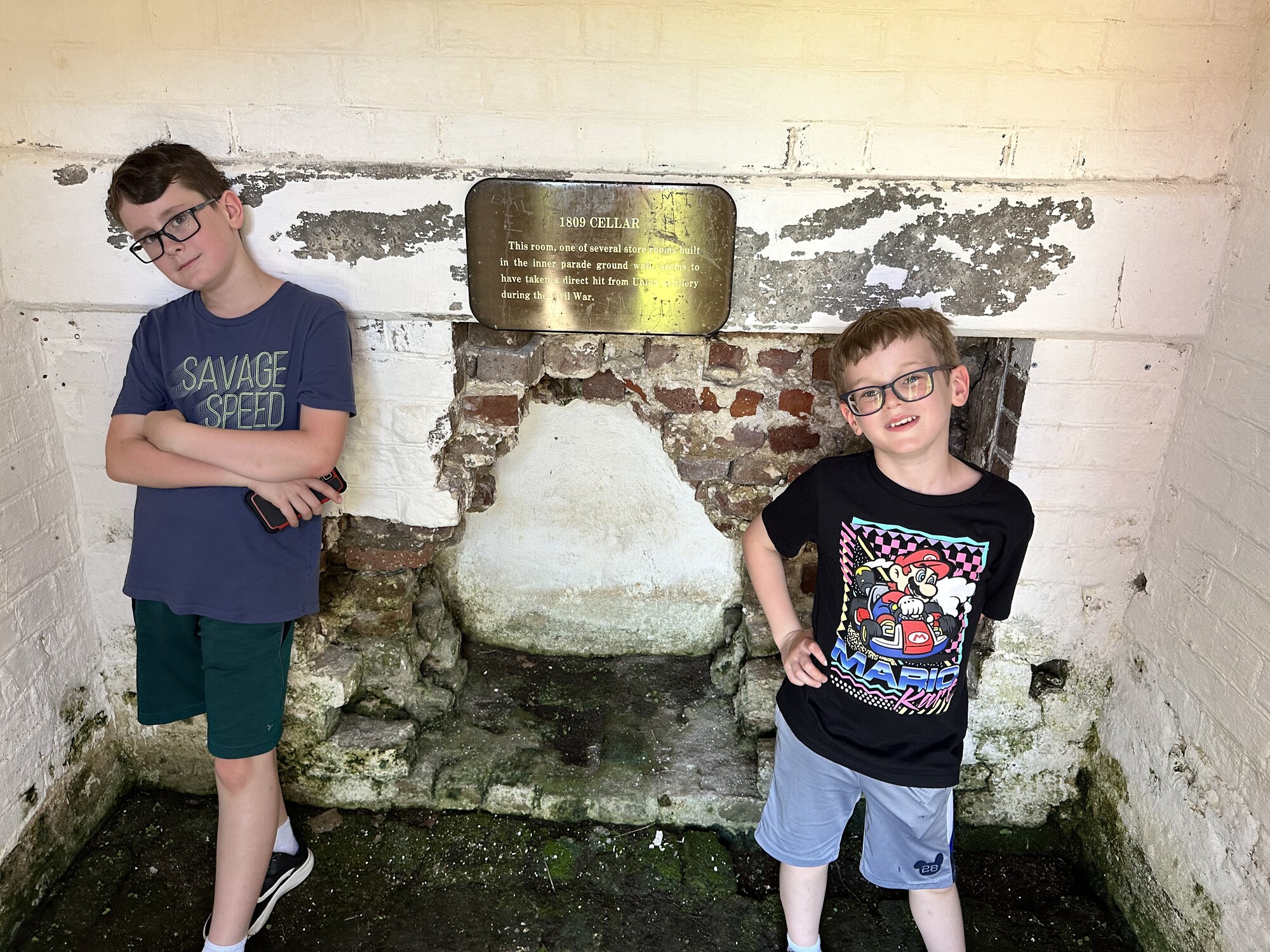
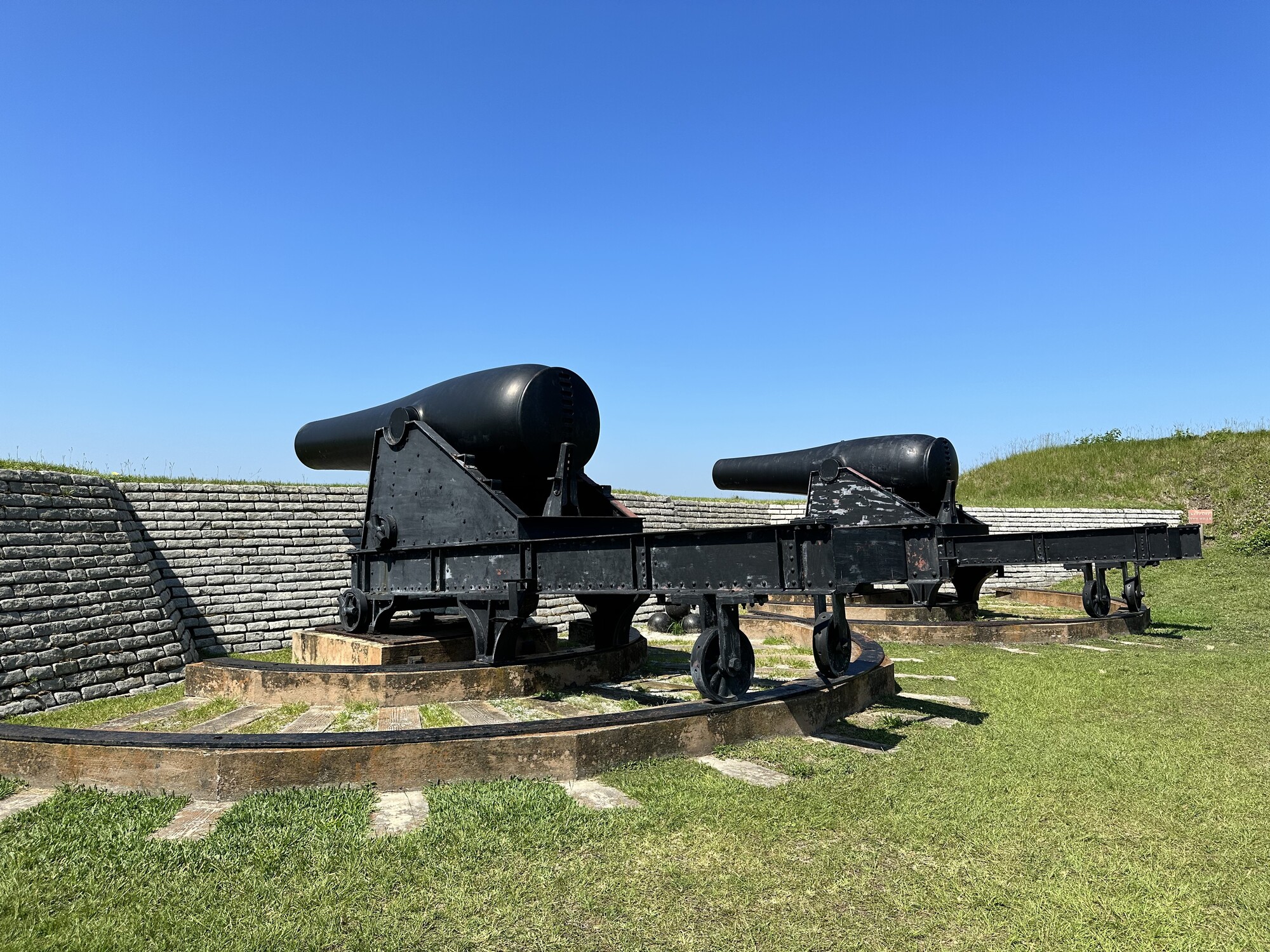
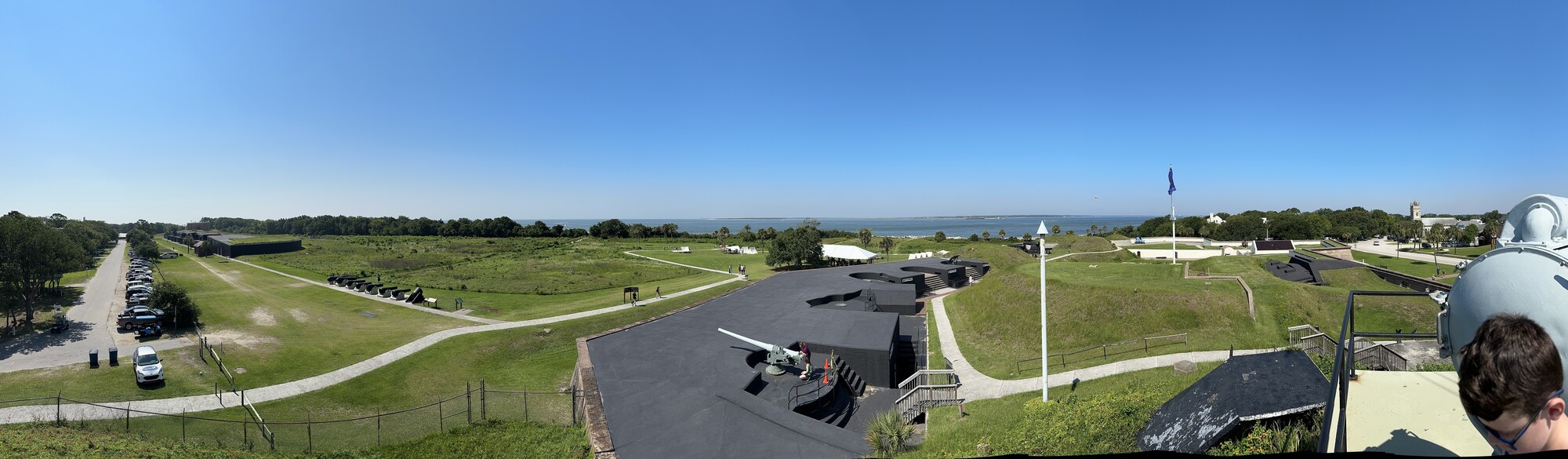
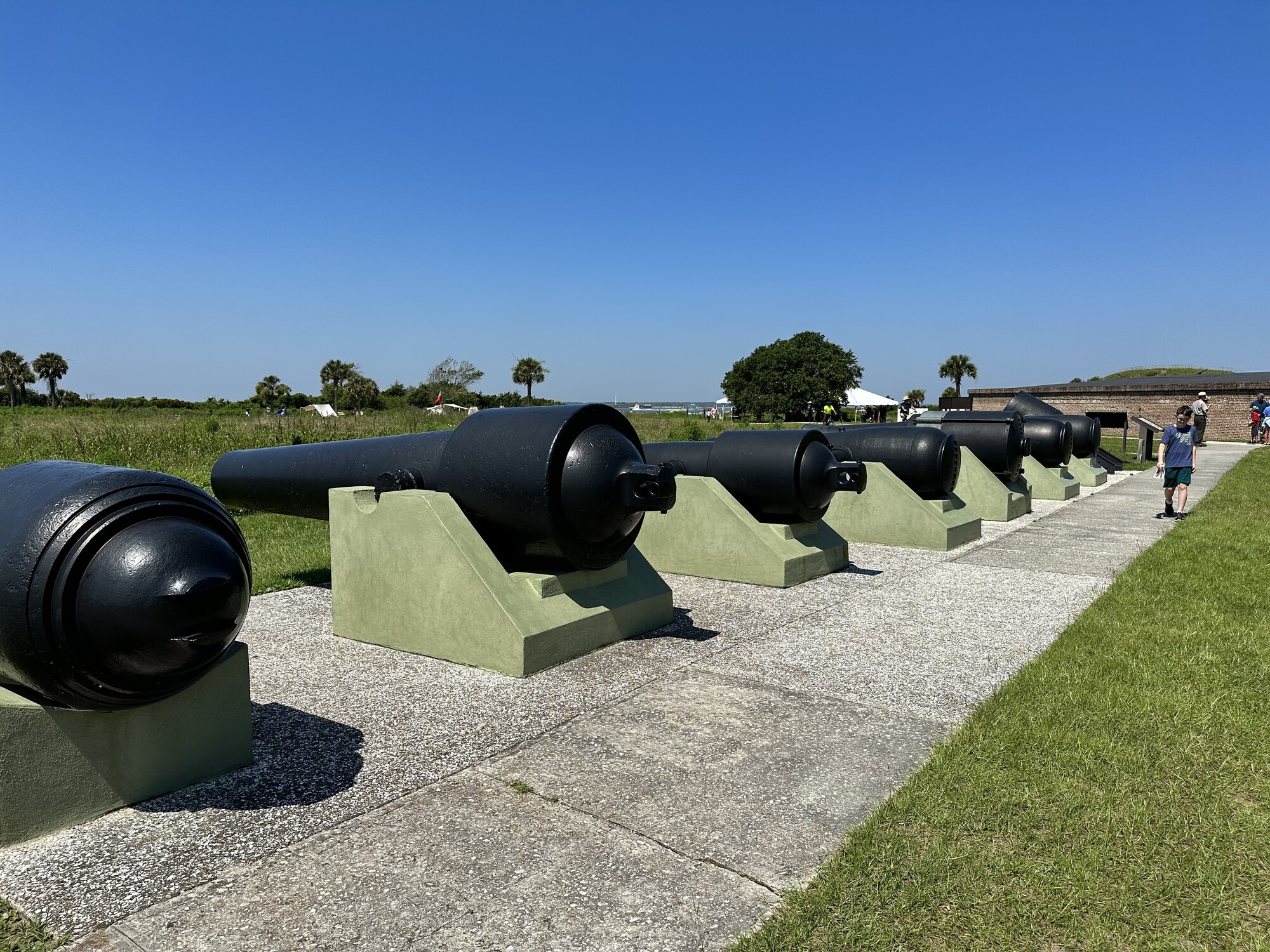
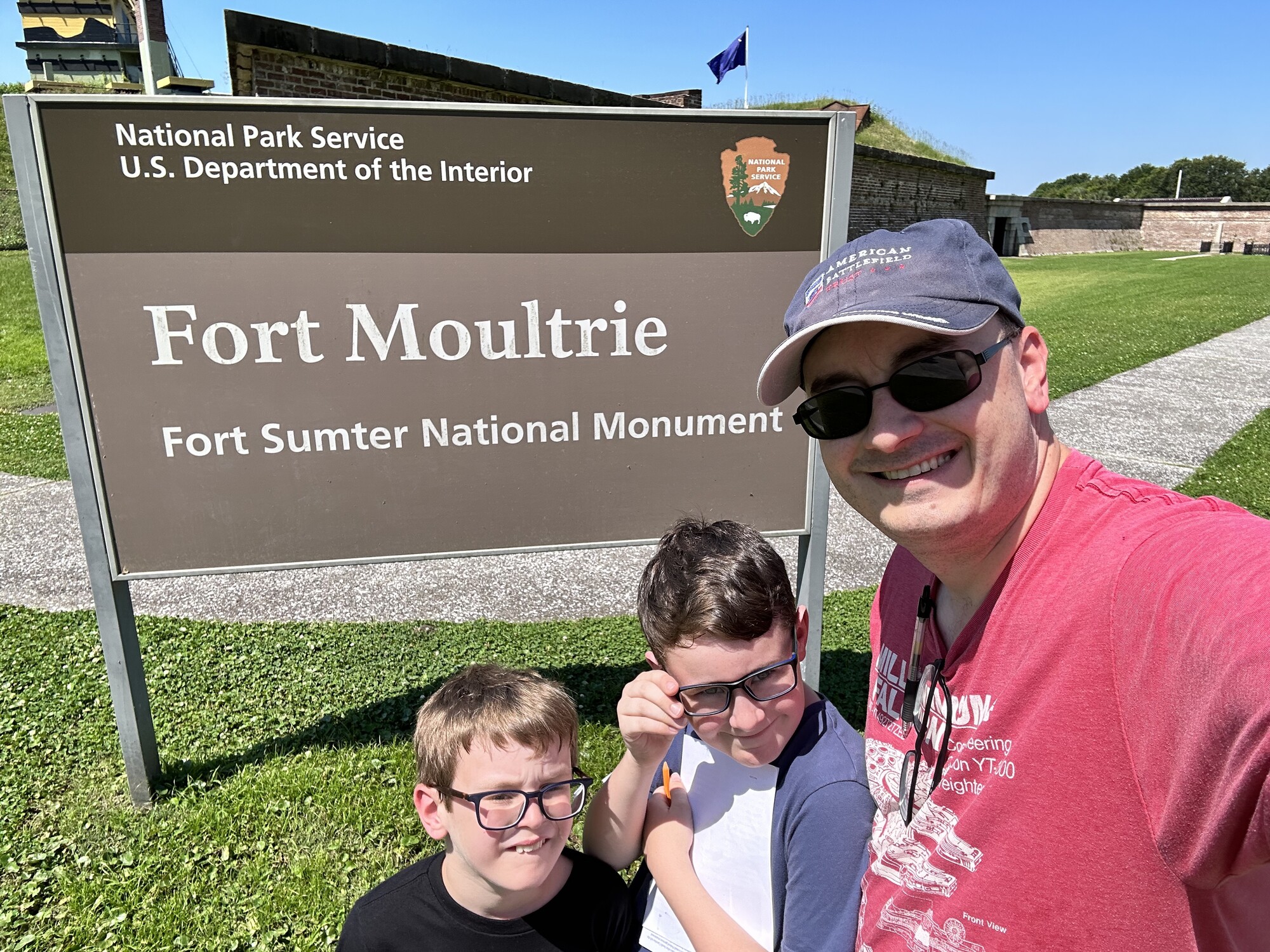
We started our morning at Fort Moultrie. This is a very cool NPS site that covers the history of coastal fortification from the Revolutionary War through WWII. Each face of the fort is interpreted as a different era. It’s a pretty cool idea.

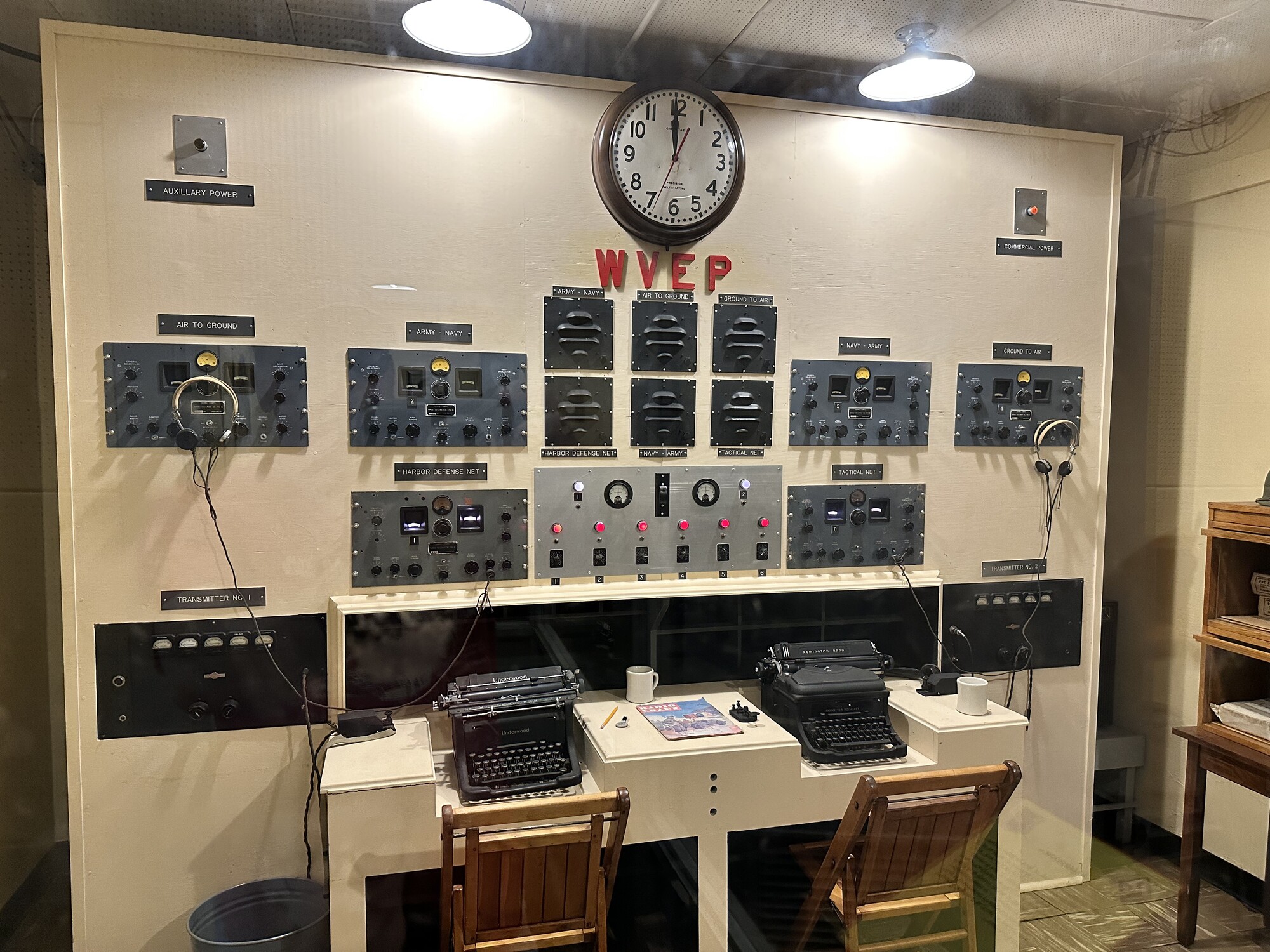
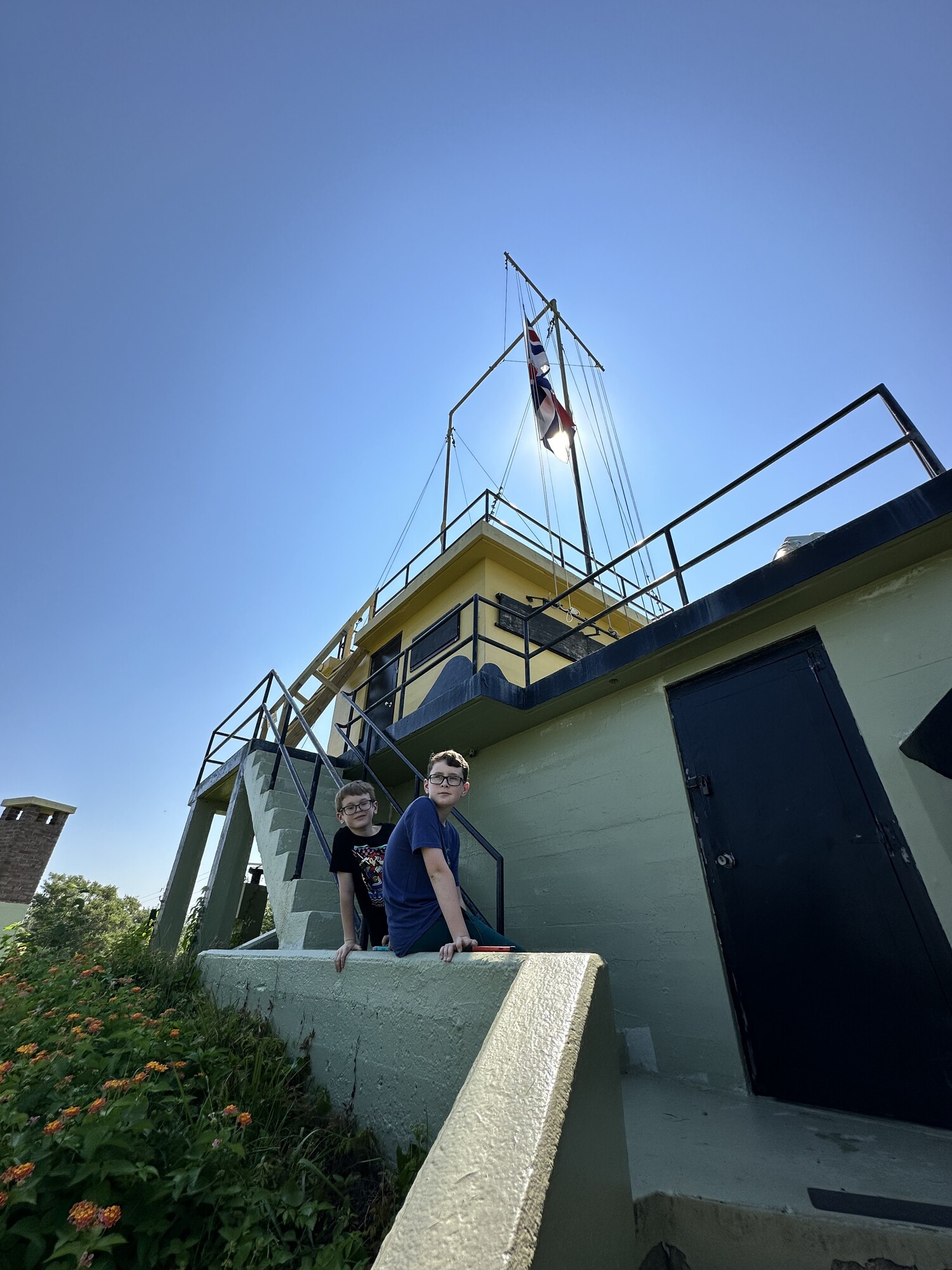
I think my crew most enjoyed the WWII-era Harbor Control Station, with it’s control tower and underground radio room. There were awesome views from the top of the tower of the entrance to the harbor – including over to Fort Sumter and Morris Island (not to get too ahead of myself).

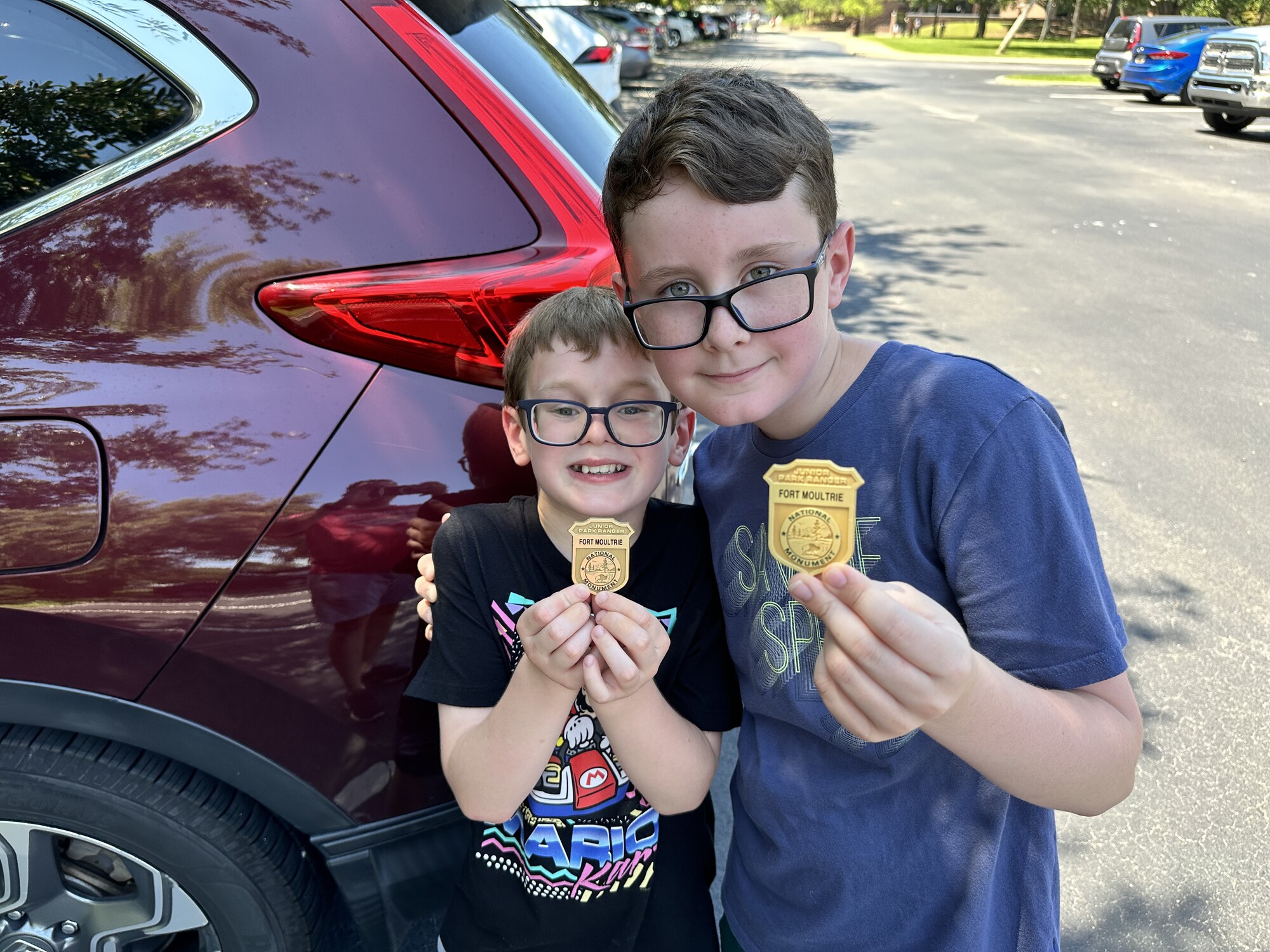
The boys were also able to earn their first Junior Ranger badges of the “Man Trip” here. The ranger who helped us with that also gave us the packets and badges for our next stop, as it was not staffed on the day we visited.
Charles Pinckney National Historic Site

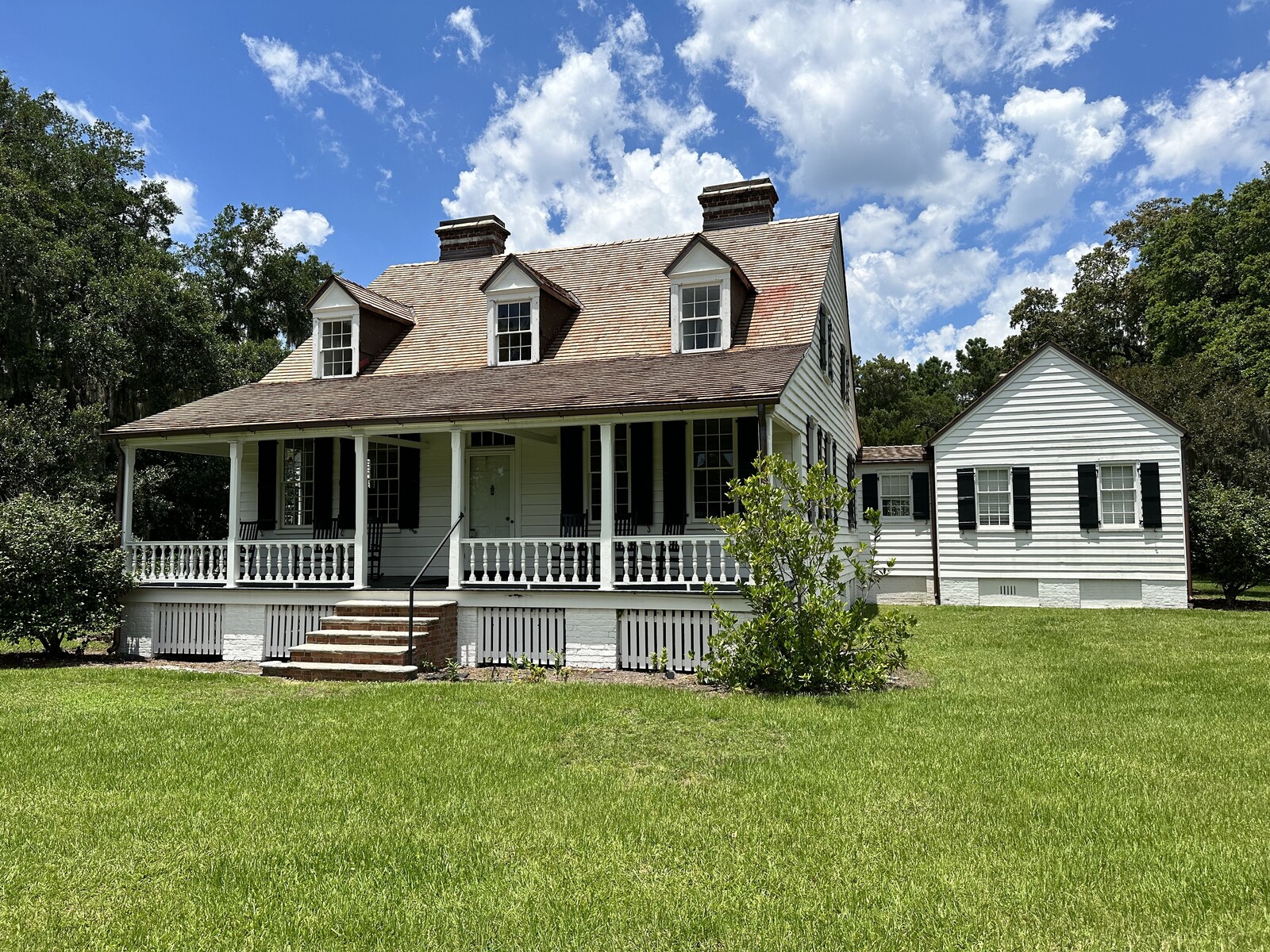
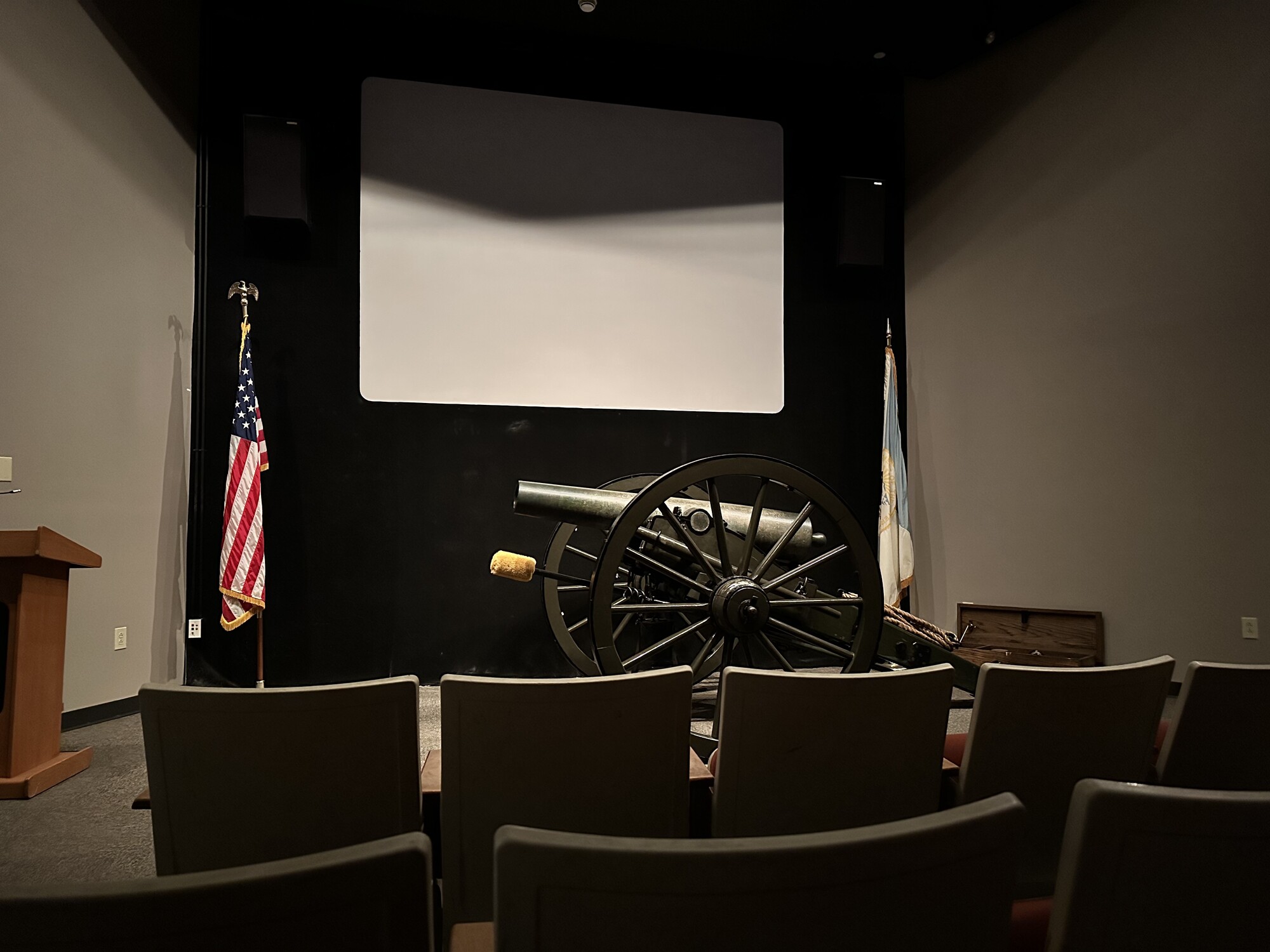
There isn’t a lot of historical interpretation going on at Charles Pinckney National Historic Site without the visitors center open, nor any NPS personnel of any kind, which is a shame.

The house that is here now is also not the original structure, and the story of the enslaved people who actually worked the fields is fairly weakly presented. Most of the property that was at one time a plantation is now neighborhoods.
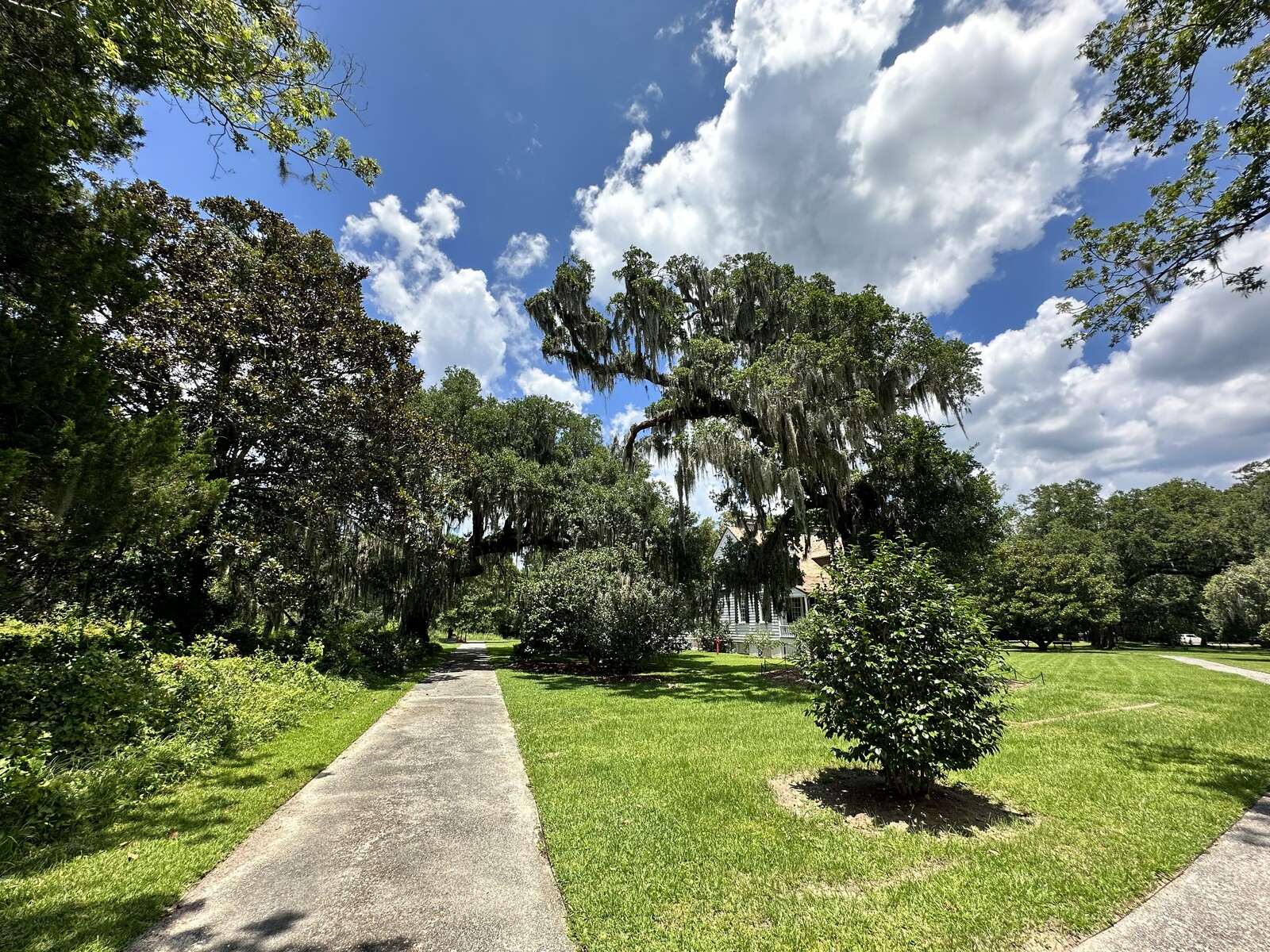
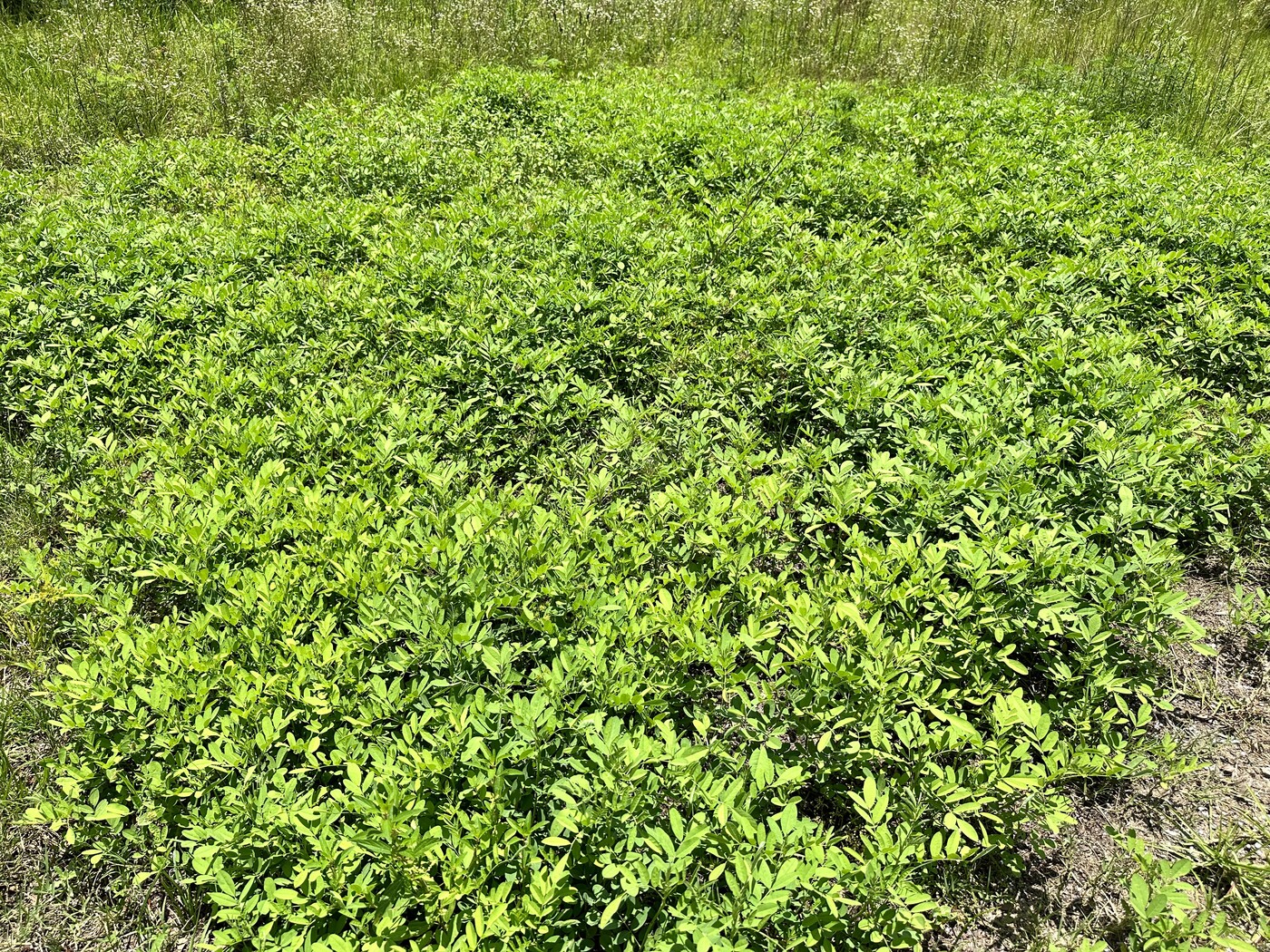
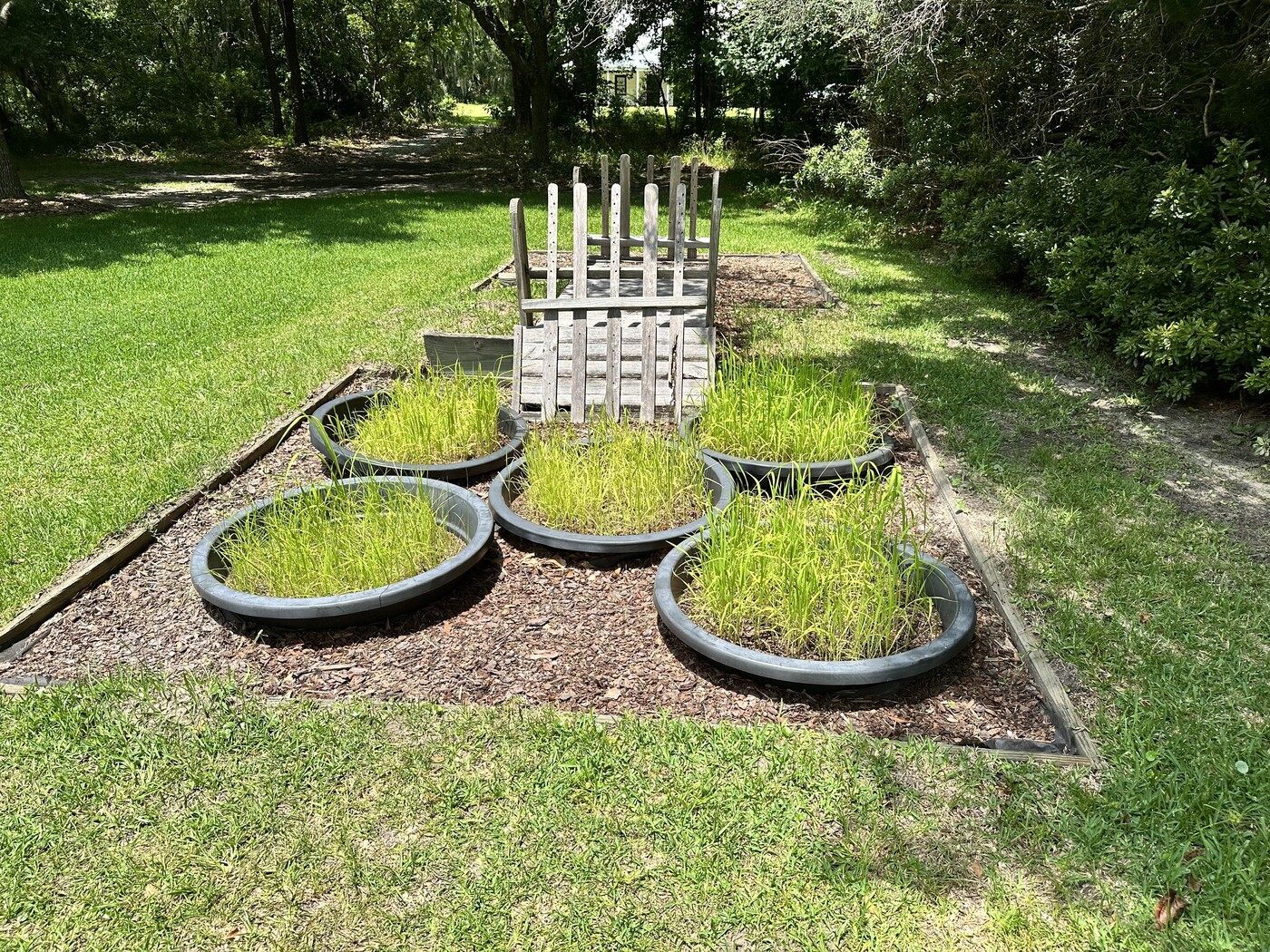
Still, they have some nice nature paths (though the boys were a little freaked-out by warnings of venomous snakes, ticks, and fire ants). We saw rice and indigo growing – two crops that Pinckney had raised on the plantation.

The boys were able to get their Junior Ranger badges by filling in some blanks with our own research.

Battle of Simmon’s Bluff – Civil War Battlefield #162

Strap in, folks. The Battle of Simmon’s Bluff is a weird one.

Disrupting supply lines was a major theme of many Civil War operations. Perhaps cutting some of the rail lines into Charleston would cause the city to fall. That was the thinking from the US commanders in the summer of 1862.

Here at Simmon’s Bluff, a single Union regiment, the 55th PA, boarded a transport ship and – escorted by a single US Navy gunboat – steamed up the Wadmalaw River, landing at Yonges Island. Their objective was to attempt to wreck the Charleston & Savannah Railroad. During their march toward that objective, they came upon a Confederate camp that was not well guarded. The surprised rebels fled in panic and the Federal troops raided and burned the now-empty camp site. Apparently satisfied with their handiwork, they turned around, returned to their boat, and left.

There were NO casualties here at all. The attackers’ objective was not achieved even though there doesn’t appear to have been ANY defense mounted. It’s a…Union victory? There are no monuments. No markers. No road-side signs. You’d never know that anything ever happened here. I can’t find any maps of the “action” or the Confederate camp in the Official Records – the only way that I found out the location was to look at the CWSAC maps and poke around the general area they described.
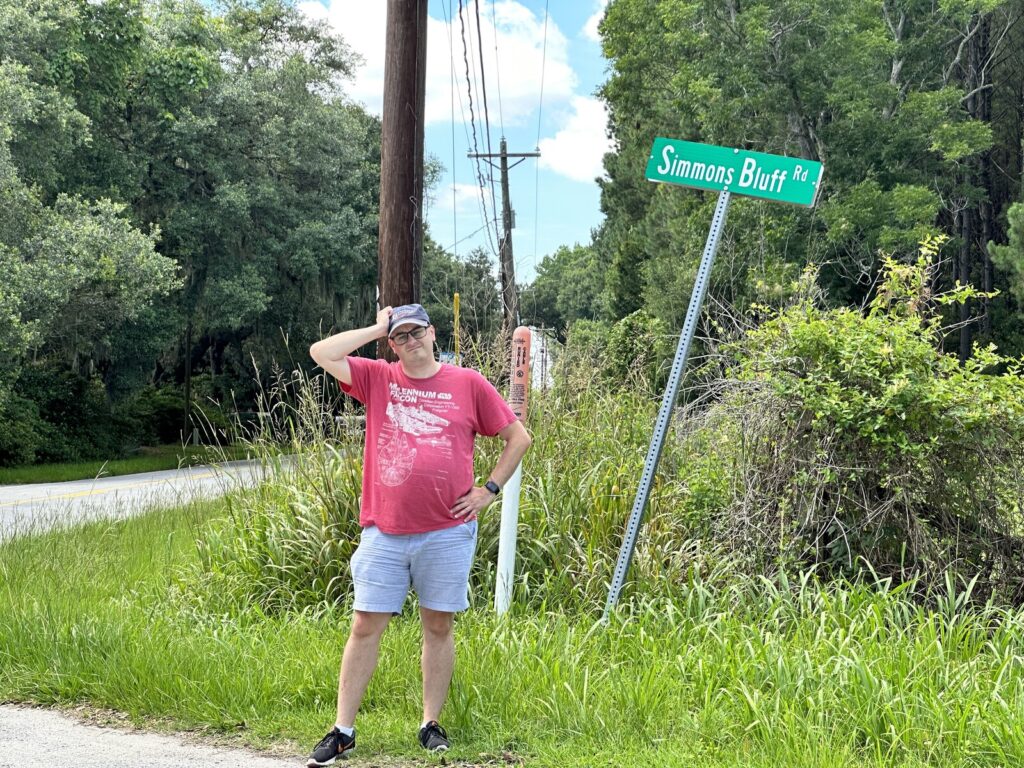
The closest thing to a marker at Simmon's Bluff is a road sign. - <i>Photo by my son, John</i>
The closest thing to a marker at Simmon’s Bluff is a road sign. – Photo by my son, John

I’m really scratching my head and struggling to figure out how this was ever labelled as an “official” “battle” of the Civil War.

Battle of Grimball’s Landing – Civil War Battlefield #163

A small Union force was landed here as a distraction during the main attack on Fort Wagner at the mouth of Charleston Harbor. This “demonstration” attack was the Battle of Grimball’s Landing. Both failed. The Confederates were well-entrenched around Charleston.
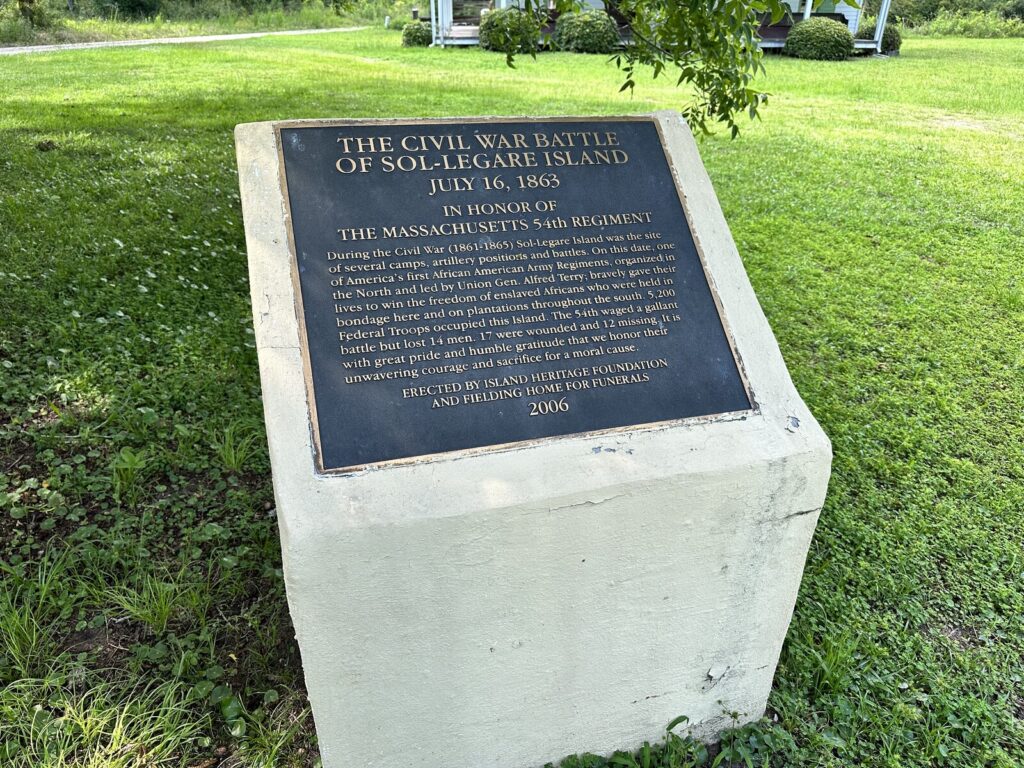
The marker for the Battle of Grimball's Landing. - <i>Photo by the author</i>
The marker for the Battle of Grimball’s Landing. – Photo by the author

One bright spot is that the rebels were not able to get around behind the Union forces to cut them off from an escape route because of the brave defense mounted by the 54th Massachusetts Infantry (of “Glory” fame). This was their first battle action and they performed very well.

There is a small monument here – mostly to the 54th MA – in front of the Seashore Farmers Lodge Museum. Not much else to see.

Battle of Secessionville – Civil War Battlefield #164

Believe it or not, the name of the town here pre-dates the Civil War. I believe it had something to do with a familial split of some sort.
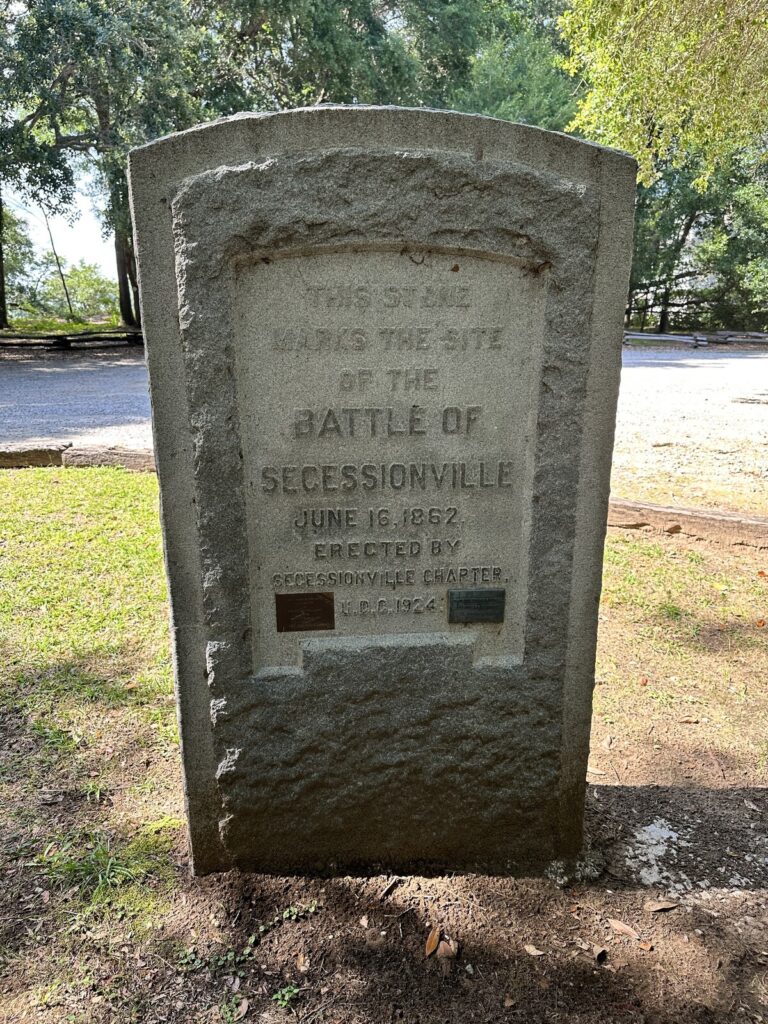
One of the markers at the Fort Lamar site. - <i>Photo by the author</i>
One of the markers at the Fort Lamar site. – Photo by the author

Regardless, the Battle of Secessionville was one of the first attempts by the Union army to re-take Charleston by land. A set of clumsy, ill-planned, and uncoordinated attacks were easily repulsed by the strong Confederate fortifications – most notably Fort Lamar – here amongst the swamp land. The Union commander, Brig. Gen. Henry Benham, attempted to deflect criticism of the blunder by trying to claim that he didn’t “attack” but merely conducted a “reconnaissance in force.” I don’t think anyone believes that.
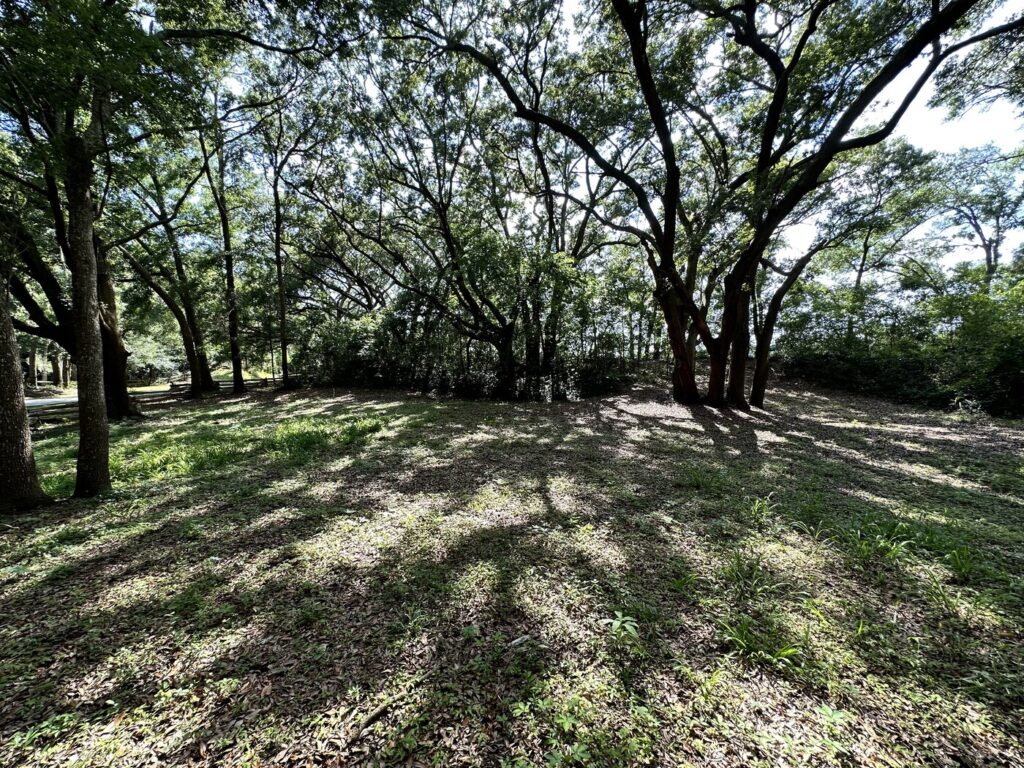
Finding the earthworks of Fort Lamar requires a little bit more imagination than usual. - <i>Photo by the author</i>
Finding the earthworks of Fort Lamar requires a little bit more imagination than usual. – Photo by the author

There is a small park here, and a friends group of some kind who seems to care for the fort, but the interpretation requires A LOT of imagination. There’s only one section of earthworks left that looks anything like earthworks. One thing that’s easy to see is how impossible this position was to attack because of the narrow approach through the wetlands.

Angel Oak

Since we were on the southwest side of town anyway, we might as well stop by and see the Angel Oak – a massive oak tree that is estimated to be as many as 400 years old. It’s pretty incredible to be in the presence of a living thing that has stood that long.
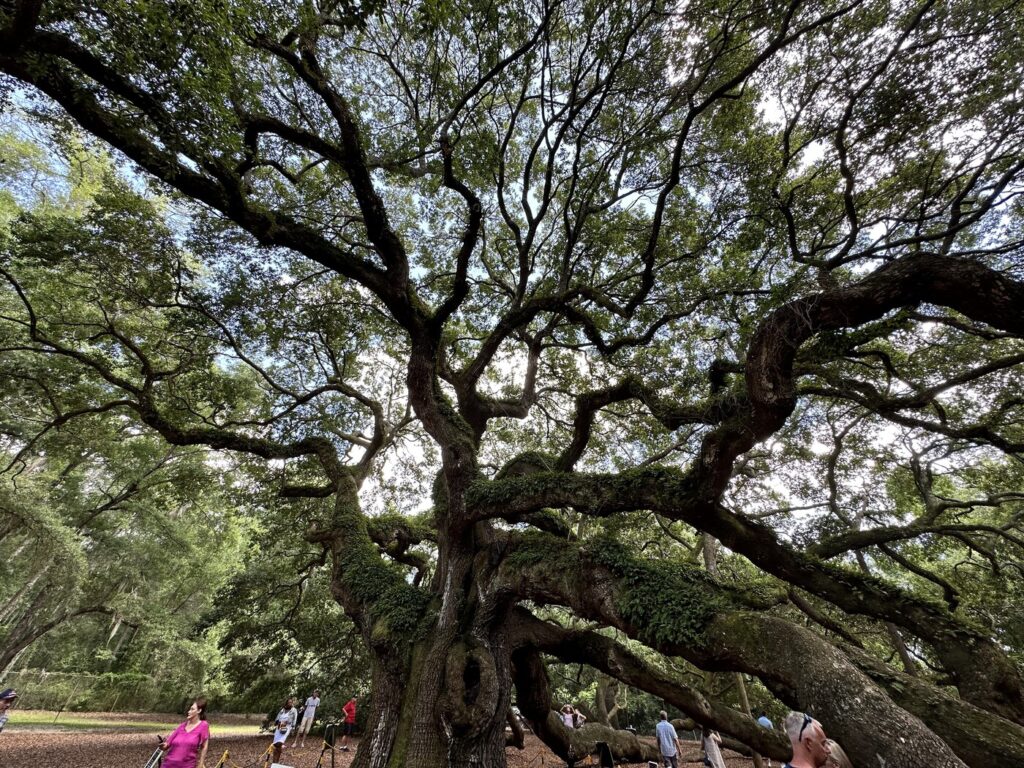
A wide angle view of the Angel Oak. - <i>Photo by the author</i>
A wide angle view of the Angel Oak. – Photo by the author

After a busy day running around to different sites on the outskirts of Charleston, it was nice to get some pizza near our hotel and hang out by the pool. The next day would bring some really awesome activities.
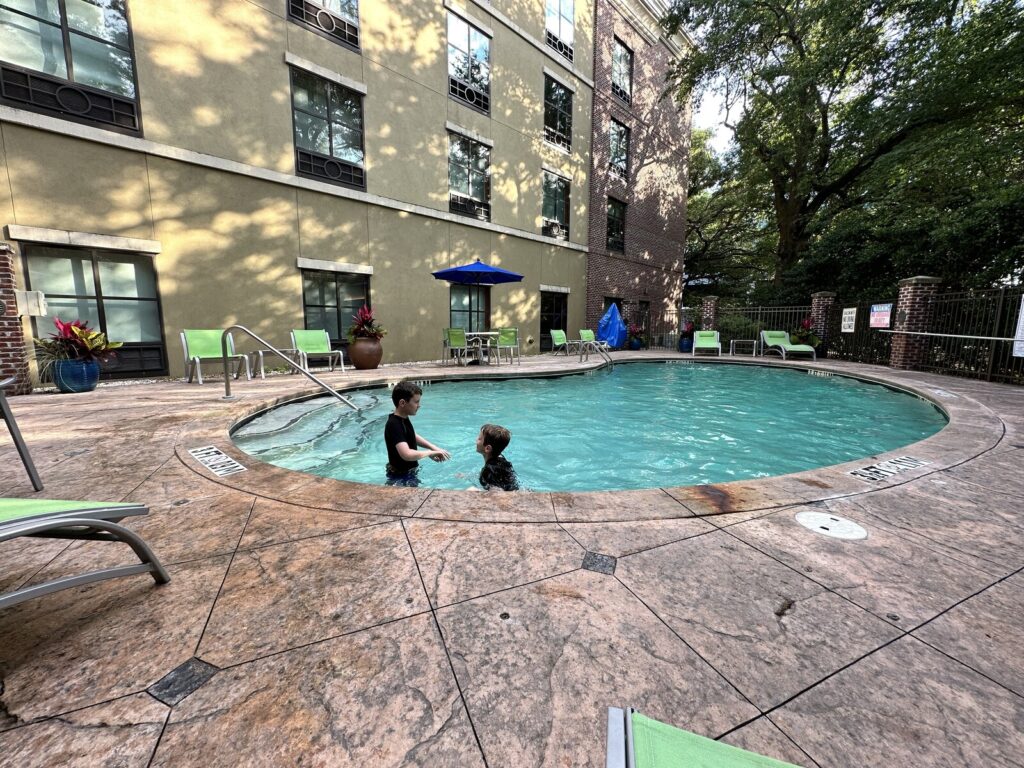
Chilling out in the hotel pool. - <i>Photo by the author</i>
Chilling out in the hotel pool. – Photo by the author

Battlefield Visits, Epic Man Trip Edition – Part 1: The Drive to Charleston

From my travels, June 24, 2023.

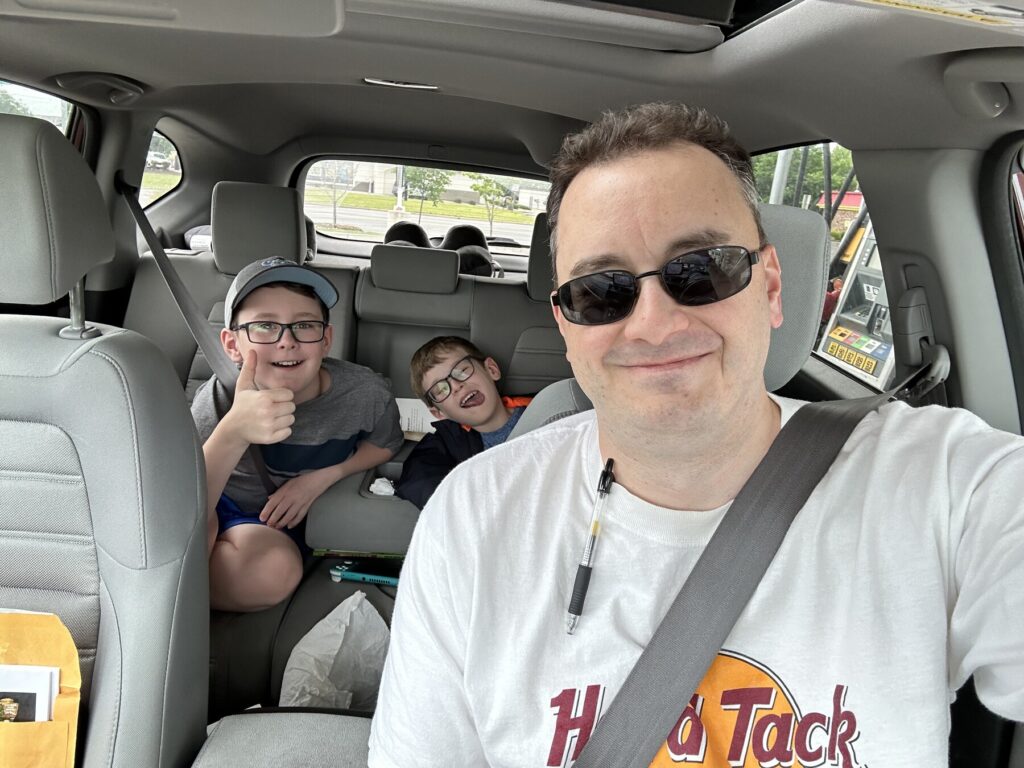
With my wedding fast approaching, I wanted to do something of a last hurrah. Long time readers can probably guess that I’m not a “bachelor party” kind of guy, so an absolutely epic history nerd trip with my sons is just about the best thing I can imagine. I spent months researching the coolest things we could see and planning the optimal route to see them. We were going to visit some museum ships, explore 31 Civil War battlefields – many of which I had never seen, and perhaps complete as many as 9 Junior Ranger badges within a week. I was thrilled to get on the road with my guys at about 6:30am and head south.

On the road with my "groomsmen". - <i>Photo by the author</i>
On the road with my “groomsmen”. – Photo by the author

Battle of Drewry’s Bluff – Civil War Battlefield #153

As part of the 1862 Peninsula Campaign, several Union warships – including the famous ironclad USS Monitor – went up the James River to attempt to shell Richmond. The flotilla did not make it past this bend in the river defended by Confederate batteries in Fort Darling on Drewry’s Bluff.

Corp. John F. Mackie was cited for his bravery serving aboard the ironclad gunboat USS Galena during the Battle of Drewry’s Bluff: “As enemy shellfire raked the deck of his ship, Corporal Mackie fearlessly maintained his musket fire against the rifle pits along the shore and, when ordered to fill vacancies at guns caused by men wounded and killed in action, manned the weapon with skill and courage.” He would receive the Medal of Honor for his actions here – the very first Marine to be so honored.

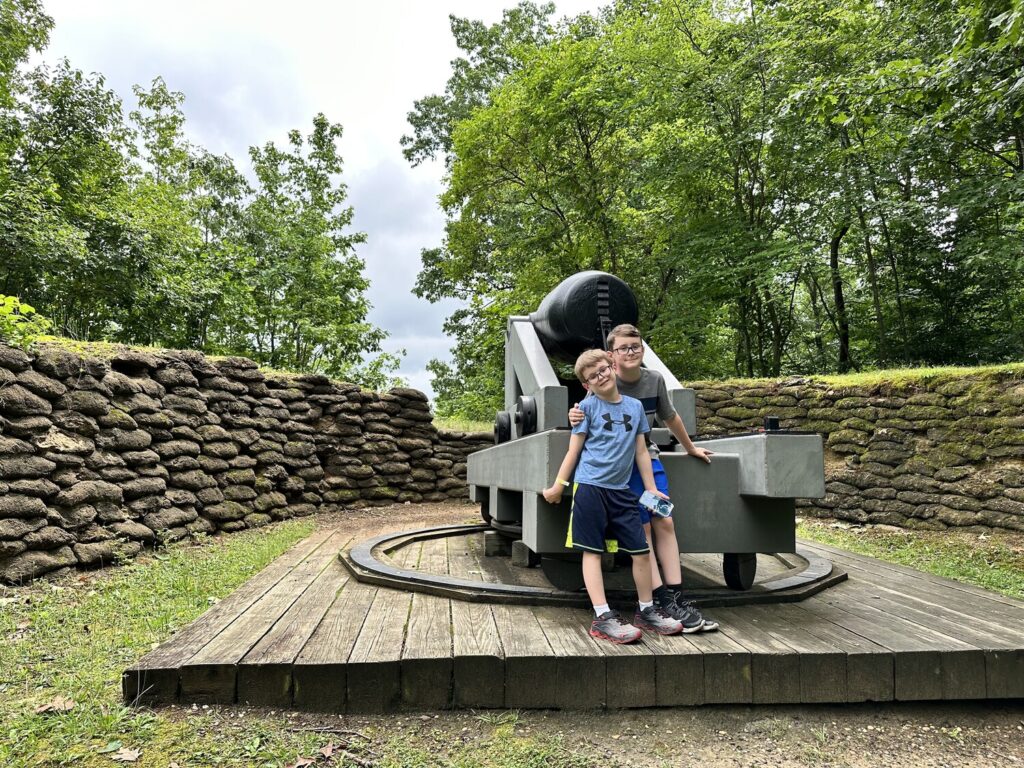
The boys pose with the Columbiad at Drewry's Bluff. - <i>Photo by the author</i>
The boys pose with the Columbiad at Drewry’s Bluff. – Photo by the author

Today, the fort is preserved as part of Richmond National Battlefield Park, and is well-interpreted. They have a Columbiad and an observation platform with a view down the river. John was surprised to learn that earthwork forts were a thing – he thought that they were all masonry or stone. I guess we need to get out more! This was an excellent first stop for us.

Battle of Proctor’s Creek – Civil War Battlefield #154

Jumping to the spring of 1864 now, we join Maj. Gen. Benjamin “Beast” Butler in his half-hearted attack along the old Drewry’s Bluff defensive line. The Battle of Proctor’s Creek was the decisive battle of Butler’s minor Bermuda Hundred Campaign against Richmond’s railroads. We ended up visiting all five of the campaign’s actions, but out-of-order for road trip routing reasons.

While the Union forces met with some success here against Gen. P.G.T. Beauregard’s outnumbered Confederates, Butler didn’t press his advantage. When the weather degraded and the Confederates counterattacked, the Federals retreated back to their defenses at Bermuda Hundred.

The remains of Fort Stevens at Proctor's Creek. - <i>Photo by the author</i>
The remains of Fort Stevens at Proctor’s Creek. – Photo by the author

There is a very small – almost hidden – park surrounded by a neighborhood here that includes a few markers and the remains of the earthworks of Fort Stevens.

Battle of Chester Station – Civil War Battlefield #155

The Battle of Chester Station is another smaller battle from Butler’s Bermuda Hundred Campaign. A light Union force attempted a raid to destroy part of the Richmond & Petersburg Railroad, but was thwarted by a larger Confederate force here. Federal reinforcements came up, but neither side really let loose. The battle was a draw, with the Confederates moving back toward Drewry’s Bluff, and Union forces returning to the Bermuda Hundred line. Only minor damage was done to the railroad.

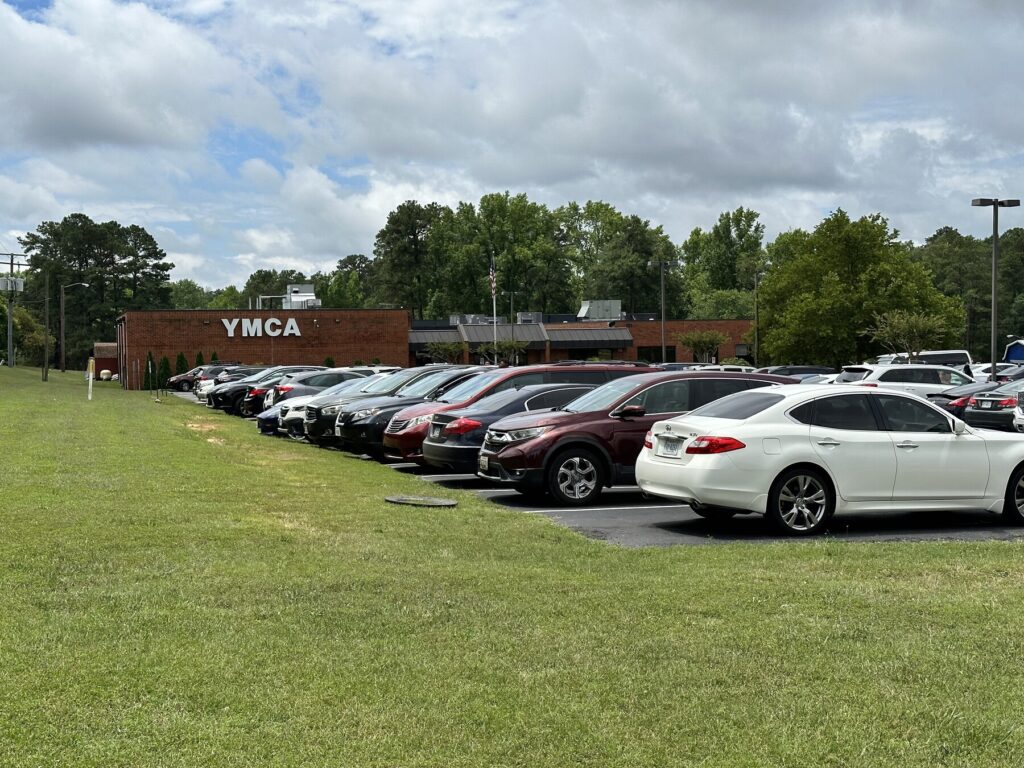
The wayside at the YMCA is the best spot left for the Battle of Chester Station. - <i>Photo by the author</i>
The wayside at the YMCA is the best spot left for the Battle of Chester Station. – Photo by the author

The wayside describing the battle is in really rough shape, but easy to find in front of the local YMCA. There isn’t much else left of this battlefield. My boys spent the rest of the trip calling it “The Battle of YMCA”.

Battle of Ware Bottom Church – Civil War Battlefield #156

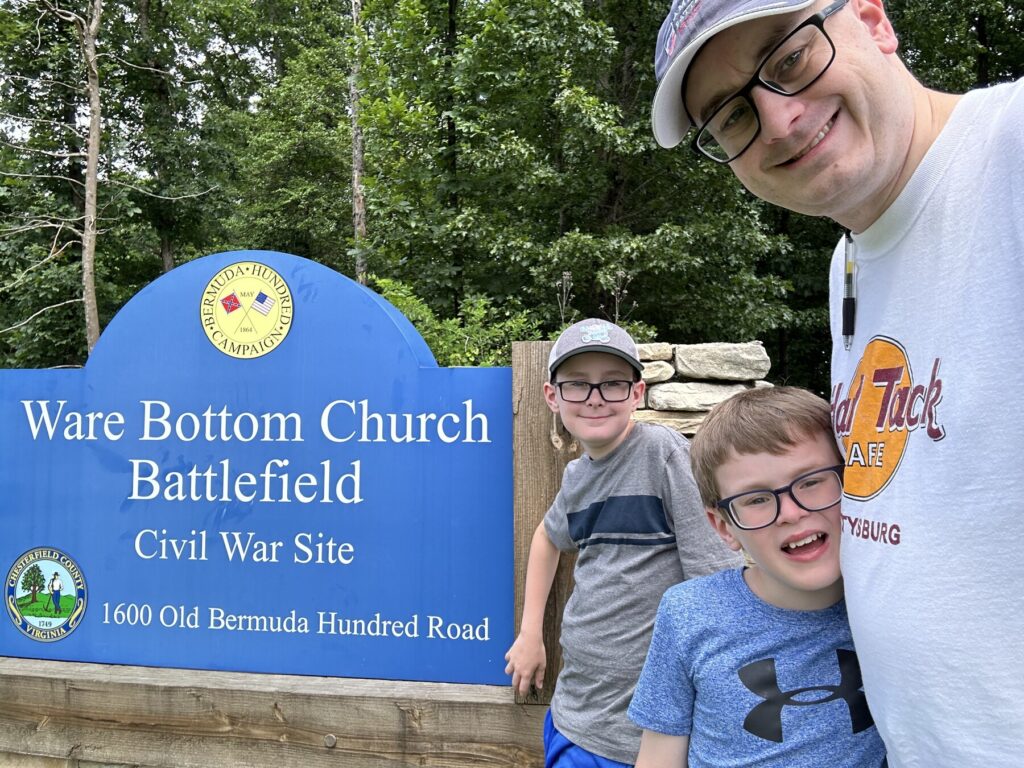
Following their success at Proctor’s Creek (which we visited earlier today) P.G.T. Beauregard’s Confederates attacked Butler’s Bermuda Hundred defenses here, while beginning work on his own defensive works: The Howlett Line; sealing the Federal troops under Maj. Gen. Benjamin Butler on their small peninsula. The Union Army of the James wouldn’t be a threat to Richmond anymore.

#SignSelfie at Ware Bottom Church! - <i>Photo by the author</i>
#SignSelfie at Ware Bottom Church! – Photo by the author

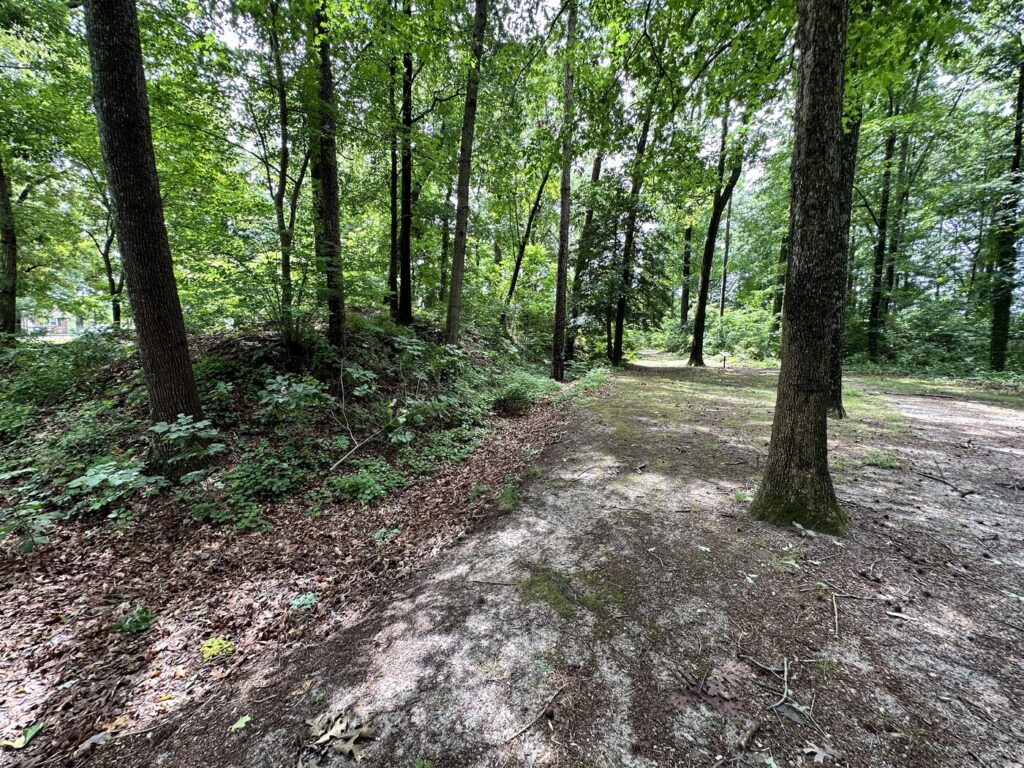
There are REALLY awesome earthworks at the Ware Bottom Church Battlefield Park that were part of the Confederate Howlett Line. We followed them back into the woods for a while. The boys really seemed interested in these old fortifications – much like they had been at Drewry’s Bluff earlier.

Battle of Port Walthall Junction – Civil War Battlefield #157

The opening battle of the Bermuda Hundred Campaign, Maj. Gen. Benjamin Butler’s troops were able to push aside Confederates here and disrupt the railroad operations at the junction. The rebels re-established their defense nearby at Swift Run Creek – which we’ll see next.

There are two markers for this battle along US-1, and that’s about it.

Battle of Swift Creek – Civil War Battlefield #158

Following their loss at Port Walthall Junction, Confederates under Brig. Gen. Bushrod Johnson attacked Butler’s Union troops here, but ultimately failed in the attempt, taking heavy casualties. Butler didn’t make a counterattack, instead settling for tearing up more railroad track. He would turn his Army of the James to the north to take on Richmond.
The boys and I have now seen all the battlefields of the Bermuda Hundred Campaign.

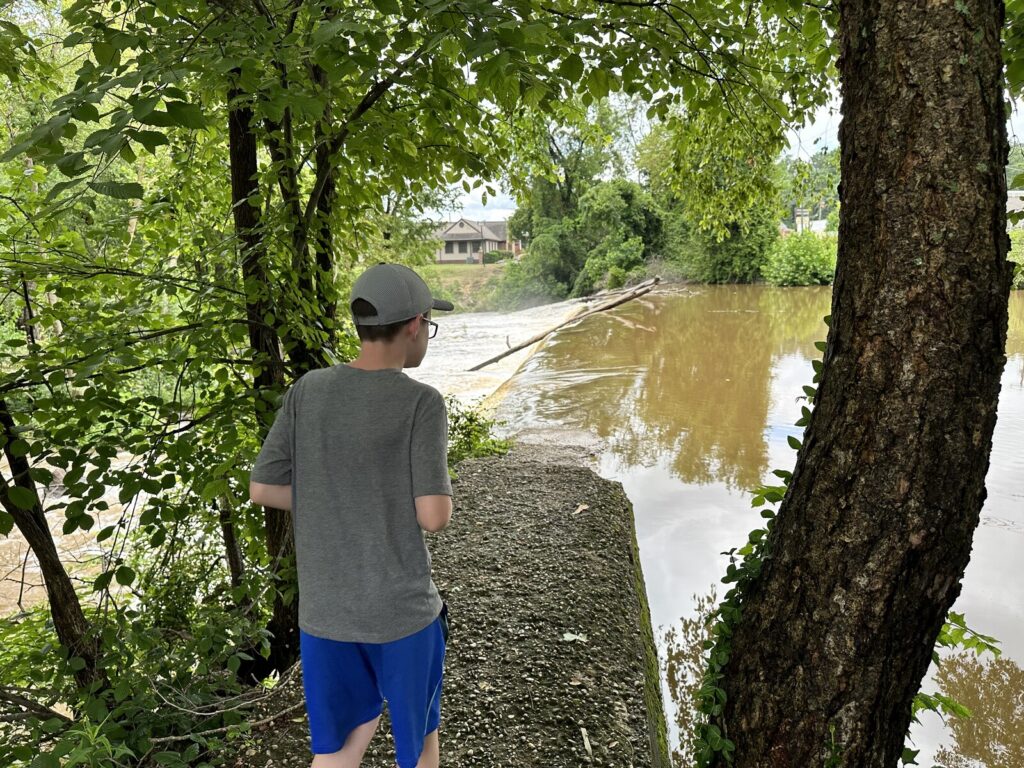
John looking out at Swift Creek. - <i>Photo by the author</i>
John looking out at Swift Creek. – Photo by the author

I love the old mill buildings (now a theatre) and the remains of the mill dam that are here. Very cool! John walked down to check them out with me.

First Battle of Ream’s Station – Civil War Battlefield #159

Even since before the days of I-95 (which the boys and I had mostly been traveling on) there have been major transportation routes running through this area south of Richmond. That’s the main reason there are so many battles that occurred here – Union forces were constantly trying to isolate Richmond by cutting off the railroads that supplied the Confederate capitol.

Here we see another example: During the Siege of Petersburg, Grant sent a cavalry force to raid along the South Side Railroad, and the Petersburg & Weldon Railroad. The two divisions of Union horsemen constituted what was later called the “Wilson-Kautz Raid“. On June 29, 1864 they converged on this station along the Petersburg & Weldon Railroad, hoping to destroy large sections of the tracks. Unfortunately, they were surrounded by Confederates and had to fight their way back to the Federal lines at Petersburg, doing only temporary damage to the infrastructure here in the process.

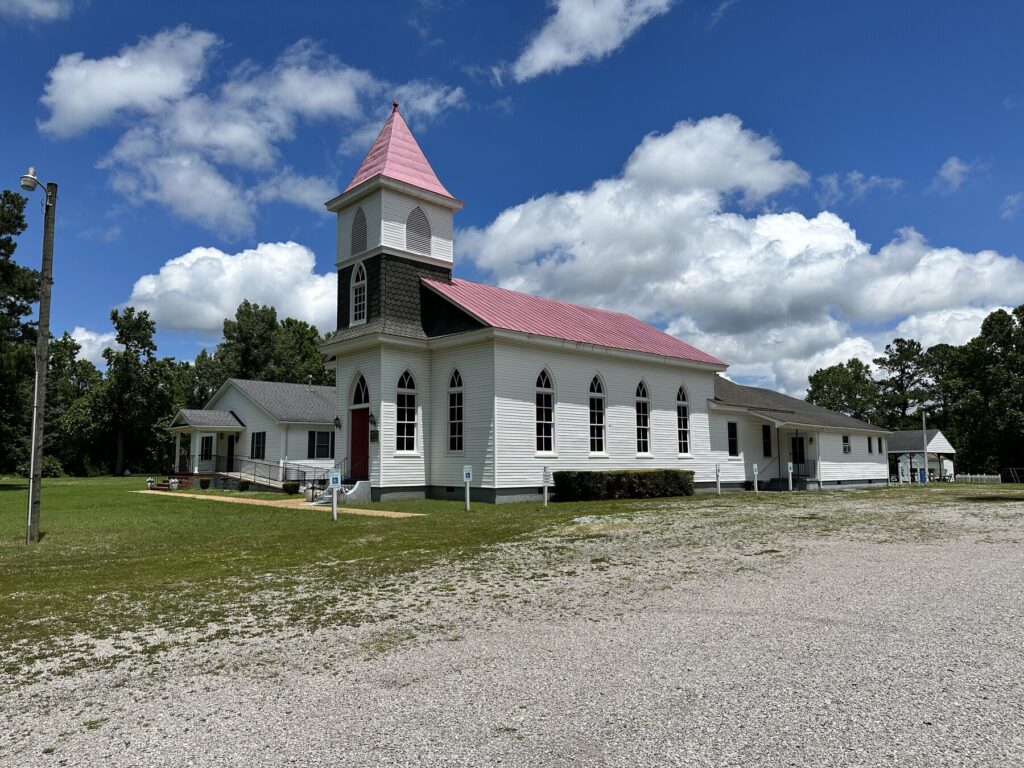
Oak Grove United Methodist Church is the best place to find information about First Ream's Station. - <i>Photo by the author</i>
Oak Grove United Methodist Church is the best place to find information about First Ream’s Station. – Photo by the author

I hope it isn’t a spoiler that this action is known as the *First* Battle of Ream’s Station….

This battlefield was a little tricky to find at first. There is a Civil War Trails sign and a pair of waysides detailing the action here associated with the Wilson-Kautz Raid in the parking lot of the Oak Grove United Methodist Church.

Second Battle of Ream’s Station – Civil War Battlefield #160

Two months after the initial cavalry raid here, Union infantry under Maj. Gen. Winfield Scott Hancock arrived in this area as part of the push by Grant to encircle Petersburg. Hancock’s men succeeded in destroying some of the railroad, but Confederate reinforcements arrived and were able to outflank the Federals from the south, bringing on the Second Battle of Ream’s Station. Suddenly, some of the Union regiments panicked, and a gap opened in the line that rebels under Maj. Gen. Henry Heth exploited.

Hancock’s men were forced to retreat, yielding a tactical victory to the Heth in the process, but it became clear that the Confederates no longer controlled the Weldon Railroad north of this point. Only the South Side Railroad remained as a lifeline for Petersburg and Richmond.

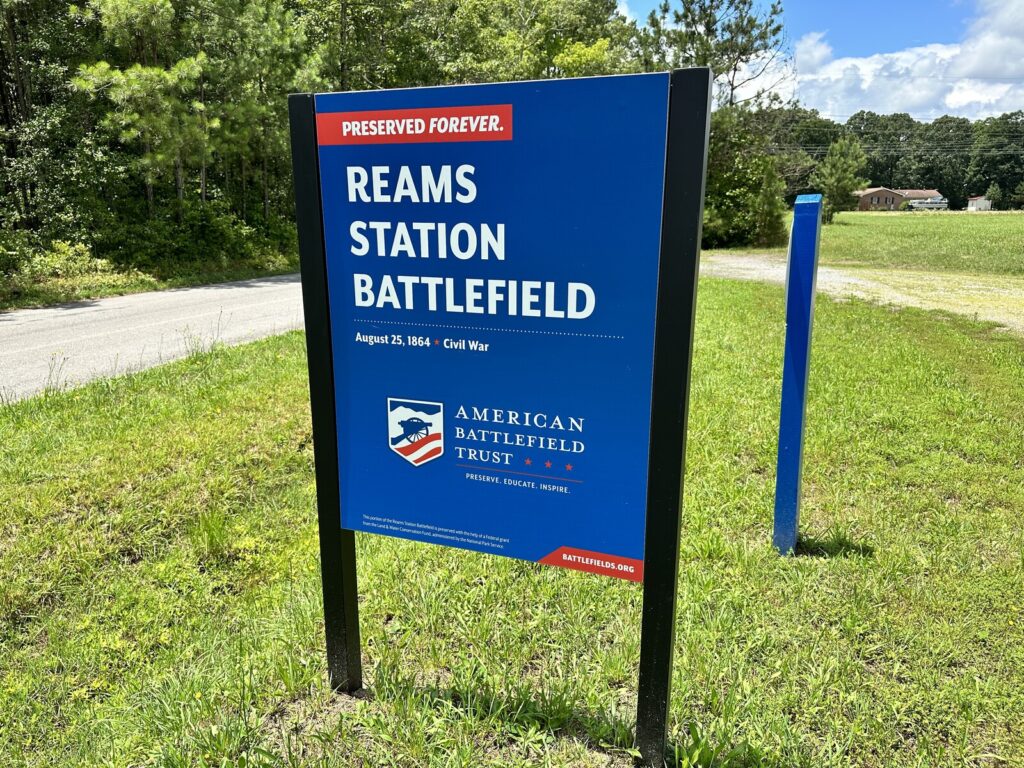
Sign for the American Battlefield Trust's portion of Ream's Station. - <i>Photo by the author</i>
Sign for the American Battlefield Trust’s portion of Ream’s Station. – Photo by the author

The American Battlefield Trust has a plot of land preserving a large chunk of the field. They have a short hiking trail marked out, and a few waysides.

Battle of Sappony Church – Civil War Battlefield #161

The cavalrymen of the Wilson-Kautz Raid were being pursued by rebel horsemen after their defeat at the Battle of Staunton River Bridge to the west. The Union boys were able to hold off the attacks here at the Battle of Sappony Church, but were forced to retreat to the north toward Ream’s Station, leading to a battle there the next day.

Sappony Baptist Church - <i>Photo by the author</i>
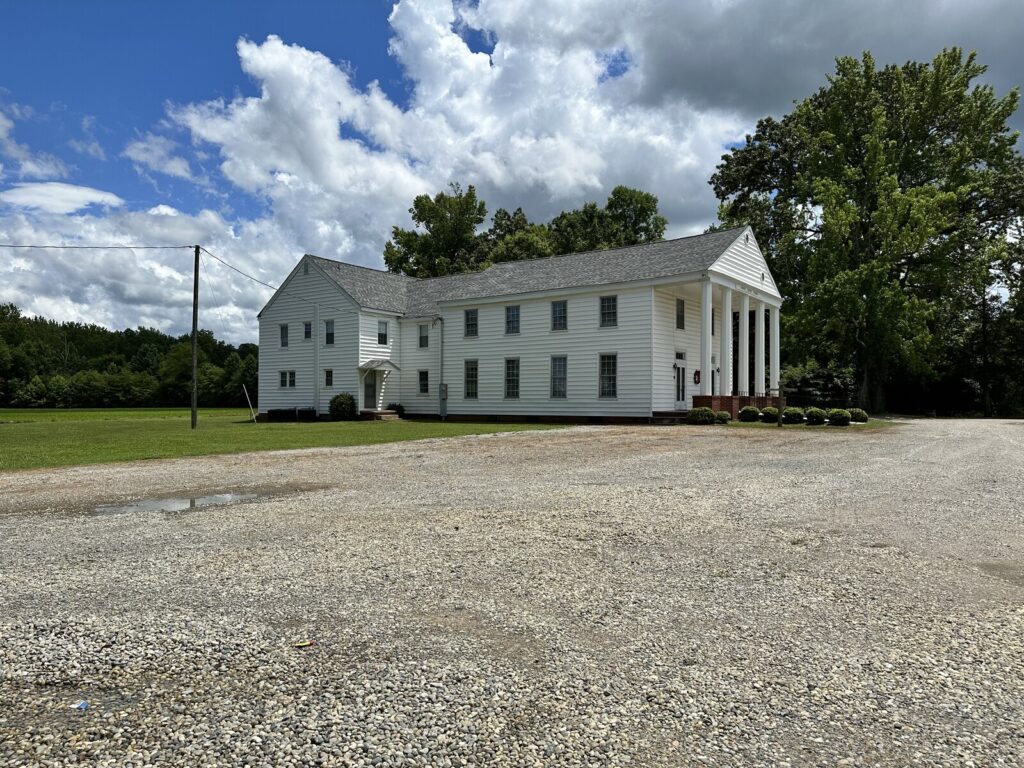
Sappony Baptist Church – Photo by the author

A wayside for this battle is in the parking lot of the Sappony Baptist Church.


So we were able to get to 9 battlefields on our first day – pretty good! It was now time for us to push south and head straight into the heart of secession – Charleston, SC!

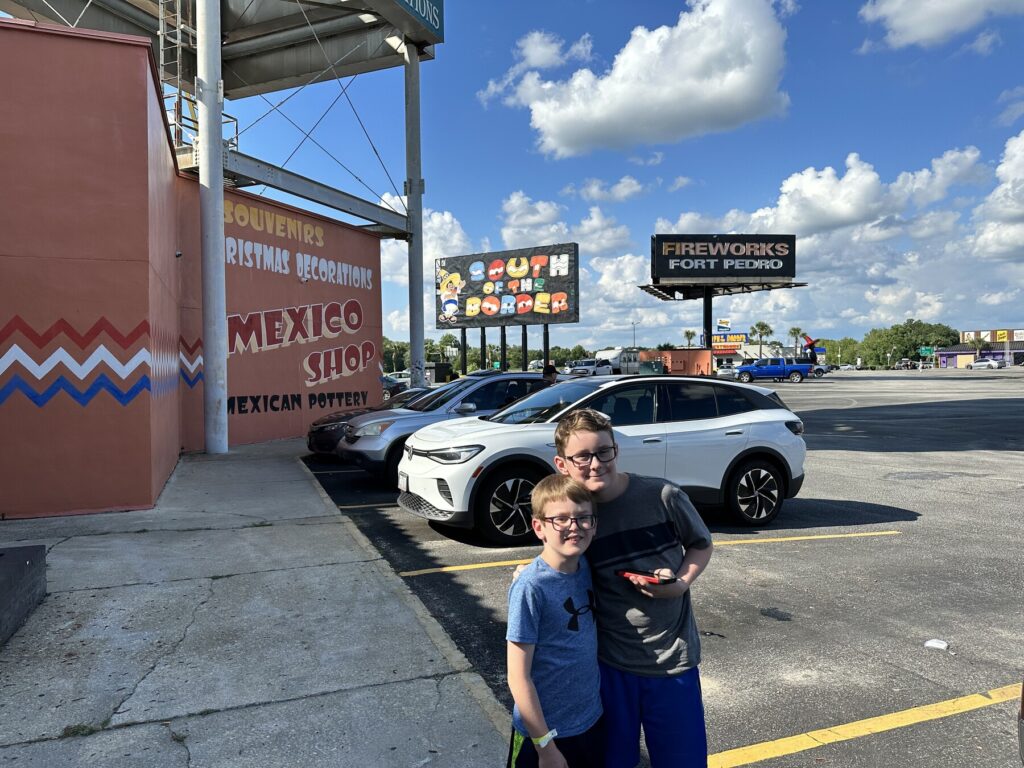
Along the way, we stopped at the North Carolina Welcome Center and then I couldn’t resist taking my boys to South of the Border when we hit South Carolina. It was so much fun to see them experience an old-school roadside attraction like that. We went into the gift shop for a while and ended up leaving with bumper stickers.

My boys outside the gift shop at South of the Border. - <i>Photo by the author</i>
My boys outside the gift shop at South of the Border. – Photo by the author

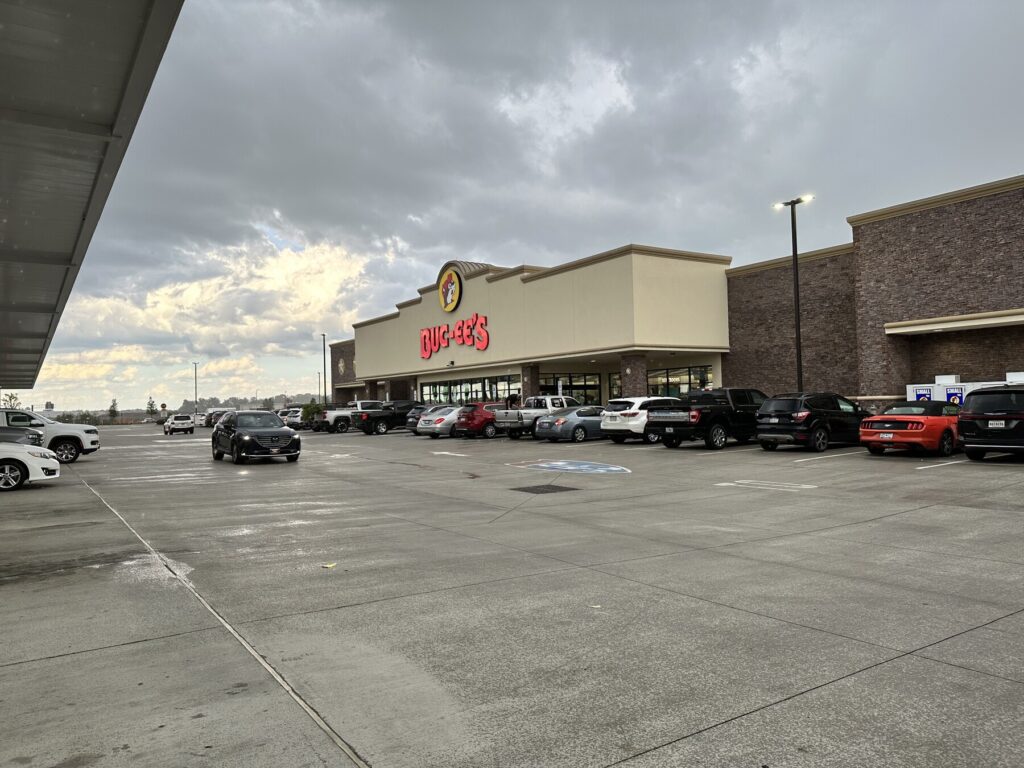
And these days, if you pass by a Buc-ee’s, you simply have to stop for dinner and gas. We made it down to our hotel in Charleston by 8:30pm and were all settled in for bedtime soon after.

Buc-ee's in Florence, SC. Our last stop before the hotel. - <i>Photo by the author</i>
Buc-ee’s in Florence, SC. Our last stop before the hotel. – Photo by the author

Battlefield Visits: South of Atlanta

From my travels, May 26, 2023.

Our family flew to Atlanta so that we could celebrate my niece’s high school graduation in Chattanooga. We left very early in the morning from Philadelphia, so once we got through the airport and got our rental car, we had some extra time on the south side of Atlanta.

During my last visit to the area, I wasn’t able to see all the fields of the Atlanta Campaign – the afternoon traffic around the city just wouldn’t allow me to make it with the time I had available. This was the perfect way to check out these remaining battlefields.

Battle of Lovejoy’s Station – Civil War Battlefield #151

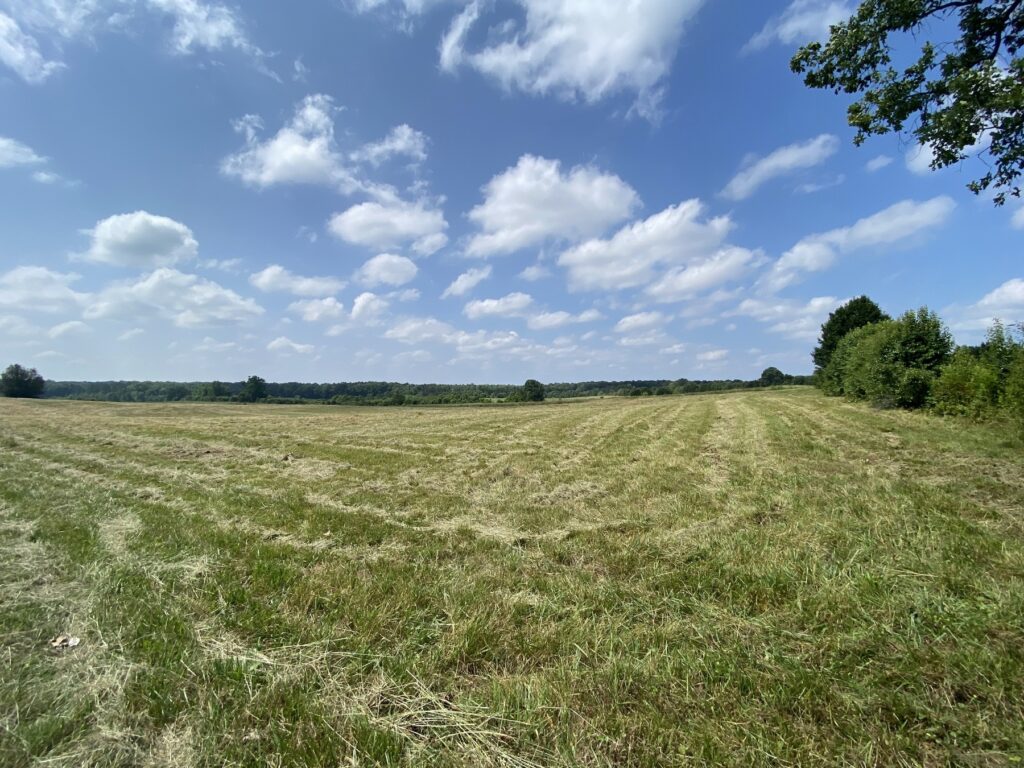
A small field that is today partly preserved within a local park, the Battle of Lovejoy’s Station was a cavalry raid led by Brig. Gen. H. Judson Kilpatrick, that was attempting to disrupt the Macon & Western Railroad. The Confederates thwarted the attempt.

The rolling fields of the Battle of Lovejoy's Station. - Photo by the author
The rolling fields of the Battle of Lovejoy’s Station. – Photo by the author

There are a few markers and waysides in the area that tell a bit of the story. Pretty good interpretation as these “minor” actions go.

Battle of Jonesborough – Civil War Battlefield #152

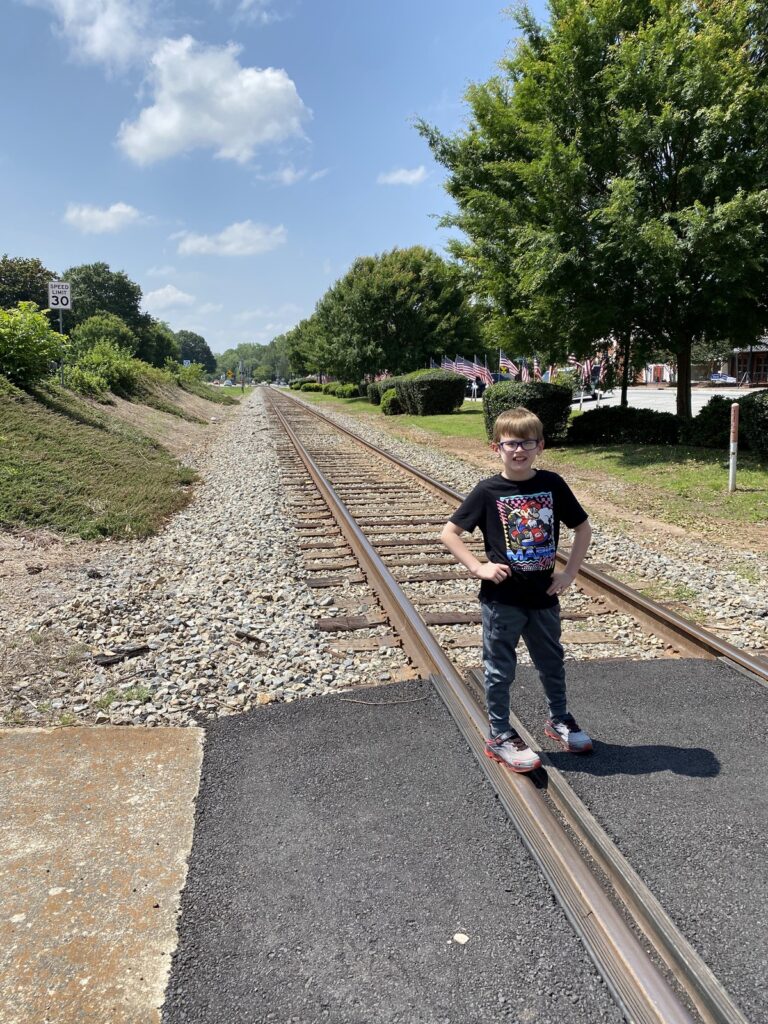
Surprisingly, this is the only CWSAC “A”-level battlefield of the Atlanta Campaign. It doesn’t seem like much is left of it, either. The train station in town is not the one that existed at the time of the Battle of Jonesborough. It was this fight that resulted in the Union capture of the Macon & Western Railroad – at the time the only Confederate-controlled railroad left running into Atlanta. The loss of this supply line forced the rebels to evacuate the city the next day.

Isaac poses along the tracks of the old Macon & Western Railroad. - <i>Photo by the author</i>
Isaac poses along the tracks of the old Macon & Western Railroad. – Photo by the author

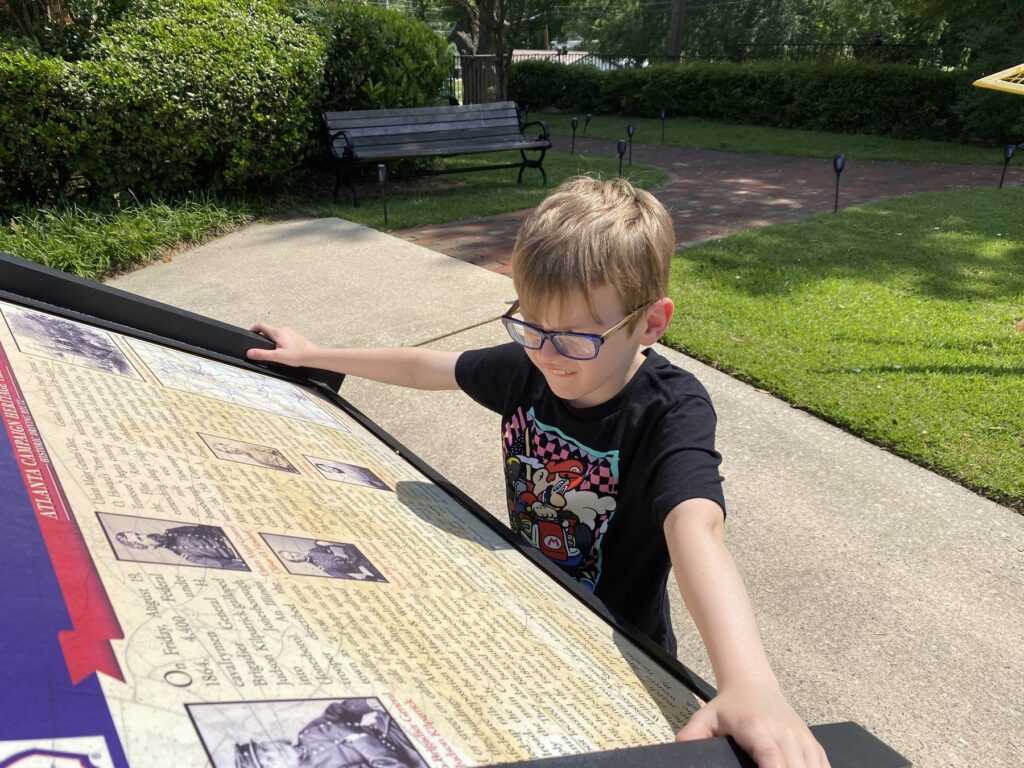
Isaac got out of the car to explore the signs and take a few photos with me. It’s very sweet to spend time with my boys engaging with history.

Examining a wayside marker for the Battle of Jonesborough. - <i>Photo by the author</i>
Examining a wayside marker for the Battle of Jonesborough. – Photo by the author

John Dickinson Plantation

From my travels, February 4, 2023.

Several months back, a good friend of mine who had grown up in Delaware, suggested that I check out the John Dickinson Plantation. We had a free afternoon, so it seemed like a good time to explore a bit.

Dickinson was an interesting guy. He is one of the rare founding fathers to have participated in all three of the important early documents: the Declaration of Independence (though he refused to sign it), the Articles of Confederation, and the Constitution (which he signed as a representative from Delaware. A native Marylander, he was among the wealthiest men in the colonies, with holdings in Pennsylvania as well. He was a prolific writer, but seemed to hold a more moderate view than some of the others – perhaps because of his Quaker beliefs. He preferred the idea of a negotiated settlement of the grievances that existed with the British crown. Toward the end of his life, he expressed limited abolitionist sentiments, eventually freeing all his slaves.

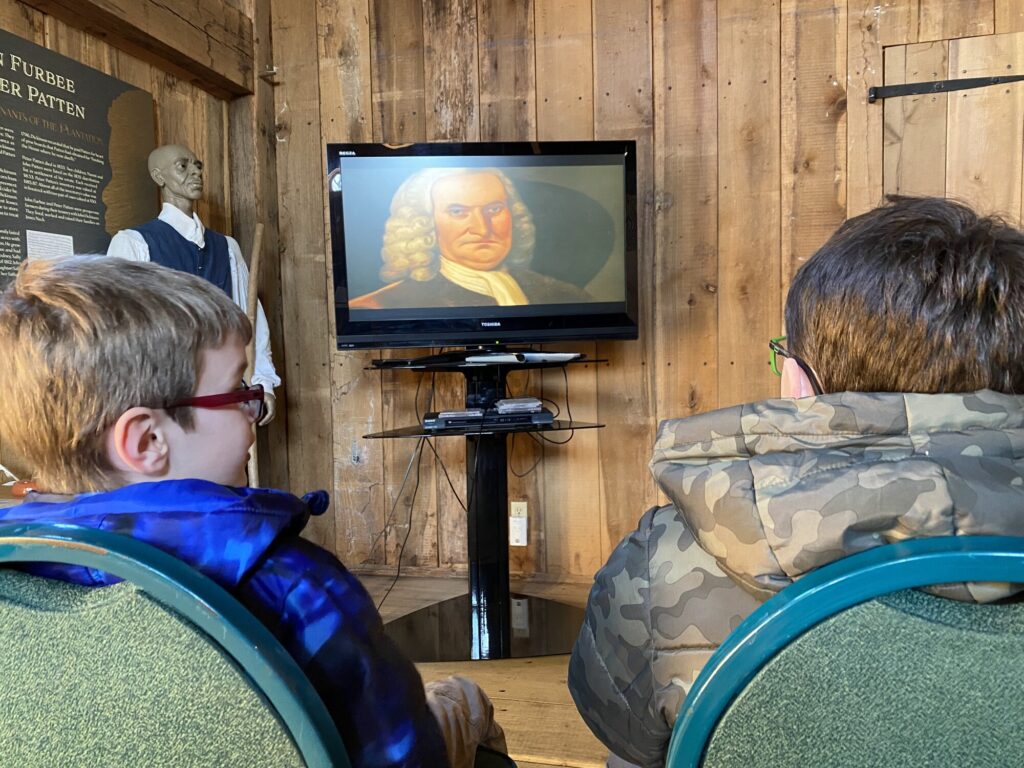
Checking out the orientation film at the visitors center. - <i>Photo by the author</i>
Checking out the orientation film at the visitors center. – Photo by the author

The historical site here consists mainly of the mansion on the property. There is a small visitors center with a very sparse museum, though the introductory film was good. One of the more bizarre aspects of the site is how it is affiliated. Up until the 1990s, Delaware had no NPS sites. There was a push to create what became First State National Historical Park by involving the NPS in a few of the state historic sites. There were no NPS employees here – it’s primarily run by Delaware, but they offer a limited Junior Ranger program. There was no book – simply participating in a tour earns the badge. They did have a few activity books about sounds in nature, so we took those, but that part of the park experience seems a little disjointed.

Moving on to the main house, the tour was interesting, but not as impressive as some of the other founders’ homes. For one thing, this was not Dickinson’s main residence, but I also think this was due to his Quaker lifestyle. Despite his wealth, he attempted to maintain a plain, modest lifestyle. One of the more interesting things that the tour guide pointed out is that his wealth was displayed in subtle ways in the home. They had extremely high ceilings, and portraits of the family members included their hands – notoriously hard to paint, and thus much more expensive.

In the end, we learned quite a bit about this founding father, and the boys got their First State Junior Ranger badges. It was a good use of a few hours.

Iron Hill Park

From my travels, December 4, 2022.

It’s been on my radar for a while to check out this small park that has some interesting historical connections. As we were on our way home from visiting family in Newark, DE, we decided to make a quick stop to check it out.

The main attraction that day was the dog park, which was wooded, but not very well maintained it seemed. There were just a few other dogs there, and our dog, Sallie seemed to enjoy herself. It was our first time taking her to any kind of off-leash area like that, so I don’t think any of us knew what to expect.

Isaac was my historical marker buddy. Everyone else wanted to stay in the warm car. - <i>Photo by the author</i>
Isaac was my historical marker buddy. Everyone else wanted to stay in the warm car. – Photo by the author

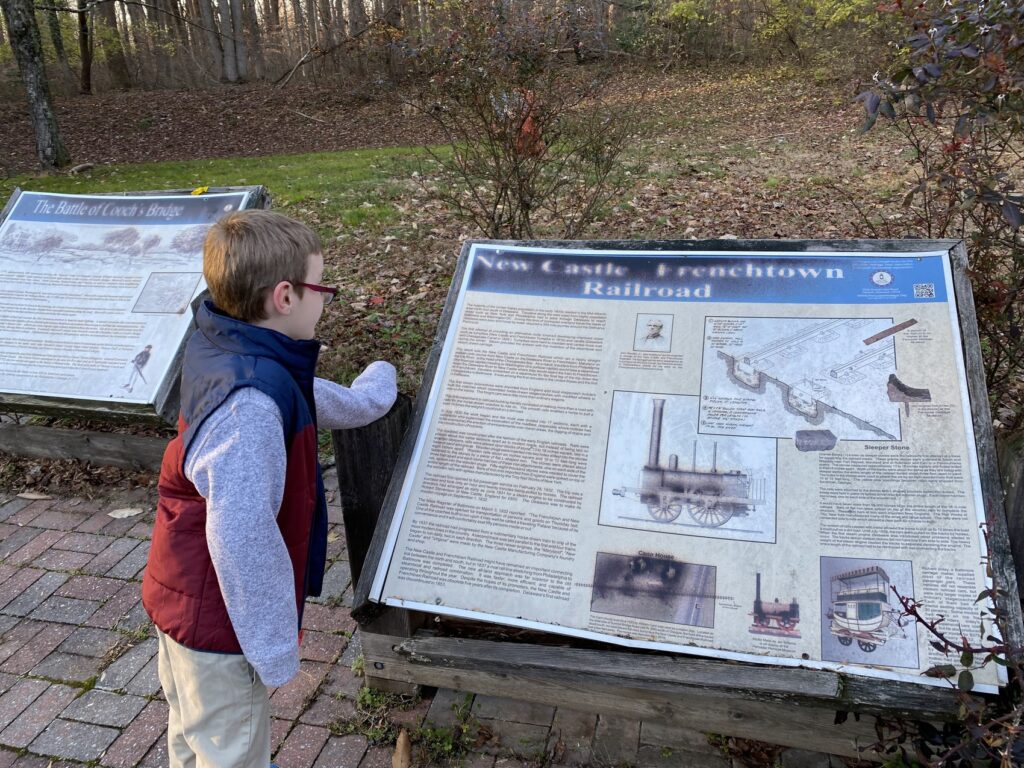
Farther up the hill, there is a collection of wayside markers discussing the geologic history of DelMarVa, the Pencader Hundred, the Battle of Cooch’s Bridge & the Philadelphia Campaign, the historic iron mining operations here (hence, the name of the hill), and Isaac’s favorite: the New Castle & Frenchtown Railroad. He insisted on reading the entire marker out loud by himself. It was actually really nice (if not a bit cold that day).

Prior to the Battle of Cooch’s Bridge, Gen. George Washington and other officers observed the British landing at Elkton, MD from atop this hill. Some fighting also took place along the slopes.

Udvar-Hazy Air & Space Museum

From my travels, April 20, 2022.

The boys and I were on spring break and spending some time with their “Nene” and “Baba” in Columbia, MD. One of the things that we wanted to do together was visit the Udvar-Hazy Center of the Air & Space Museum in Northern Virginia.

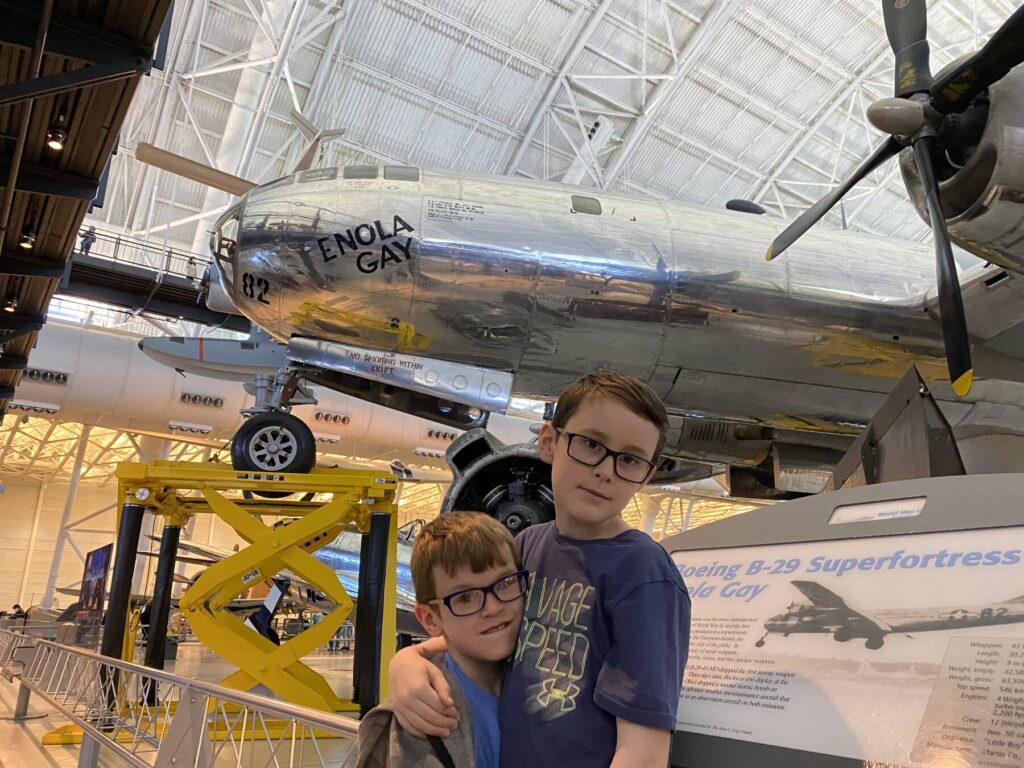
We wandered around the impressively large museum for a while – they have a huge collection of aircraft – some with a particular historical significance. That day, we saw the Bell X-1 Glamorous Glennis that first broke the sound barrier (seemingly out here because of renovations happening to the museum in downtown DC). We also got to see the B-29 Enola Gay and I did my best to explain the complicated history around the use of nuclear weapons at the end of WWII.

The boys pose with the <i>Enola Gay</i> - <i>Photo by the author</i>
The boys pose with the Enola GayPhoto by the author

Both boys really enjoyed seeing the SR-71 in the collection – which set a speed record on it’s final flight from Los Angeles to Washington, DC, making the journey in 1 hour, 4 minutes, and 20 seconds, to become part of this museum. On the day we visited, they had something of a remote, Zoom-like setup going with a large TV and an expert on the SR-71 who was giving a presentation and answering questions. Isaac got to ask her a couple and felt like it was the coolest thing in the world.

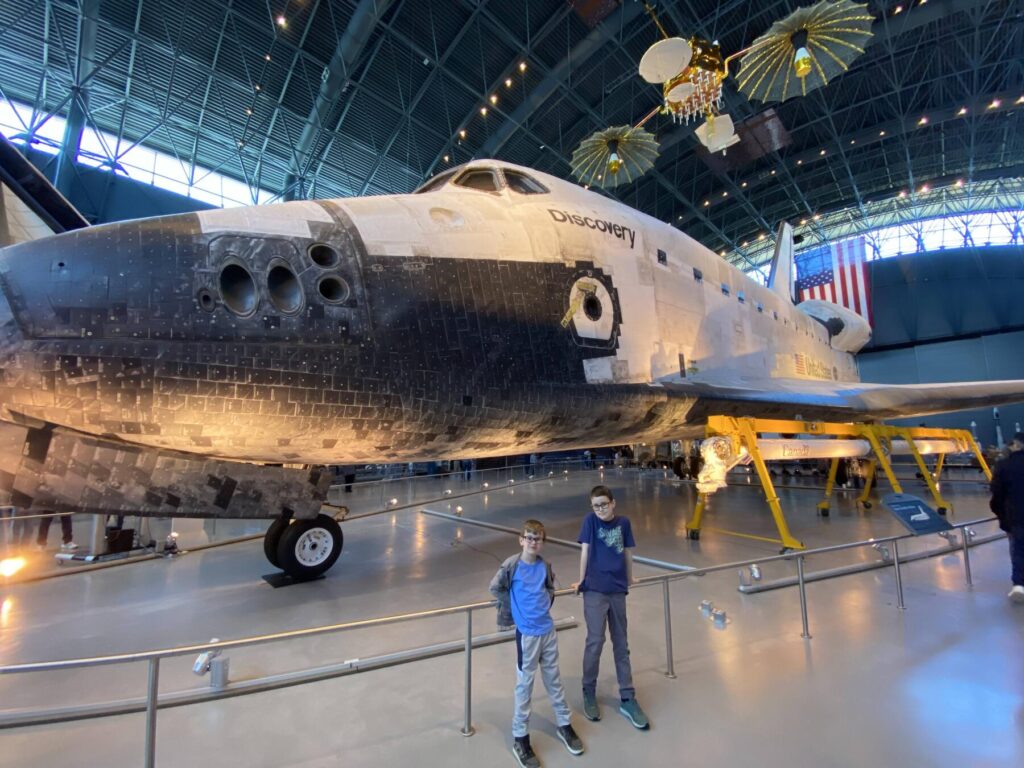
Of course, the Space Shuttle Discovery was also a hit. It’s the centerpiece of the museum’s space wing, and it’s impressive to see not only its size, but to know that this vehicle went into space so many times.

With the Space Shuttle <i>Discovery</i>. - <i>Photo by the author</i>
With the Space Shuttle Discovery. – Photo by the author

One of the more interactive exhibits was done by Garmin. They had a computer game-like display with a yoke that was attached to a model plane suspended in a glass box. As you moved the yoke, the plane moved, too, demonstrating the concepts of pitch, roll, and yaw. That was pretty neat.

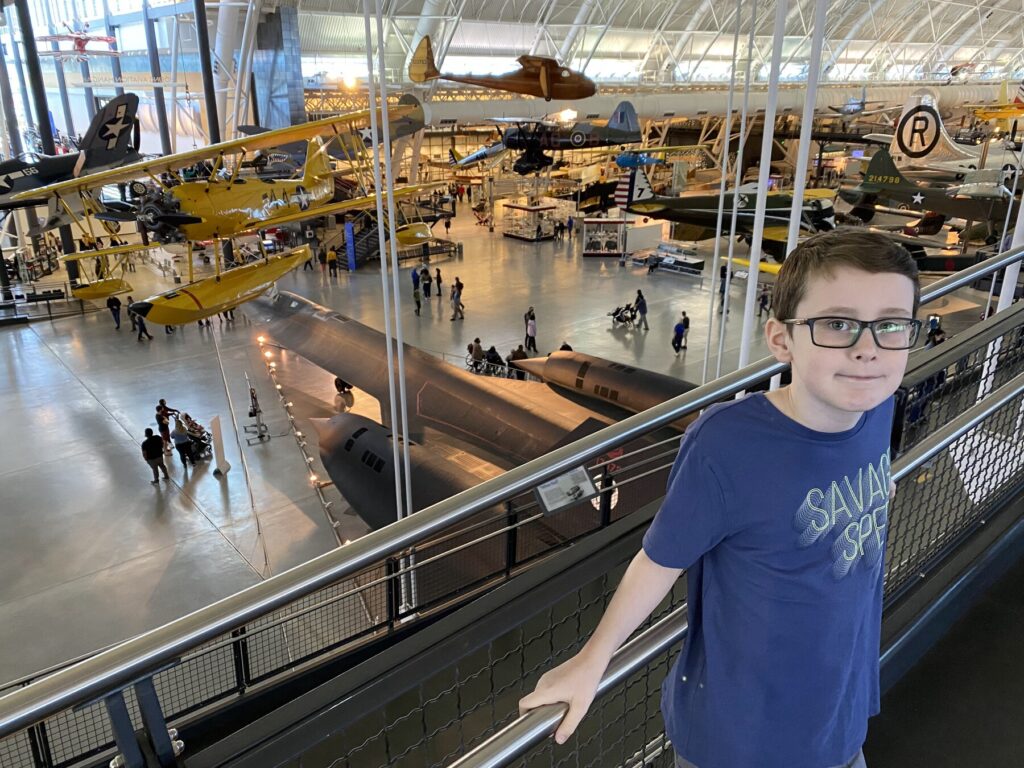
At the end of our visit, “Nene” wanted to go up in the observation tower. Isaac went along with her, while the rest of us stayed a little closer to the ground.

I really like this shot of John overlooking the main floor of the museum. - <i>Photo by the author</i>
I really like this shot of John overlooking the main floor of the museum. – Photo by the author

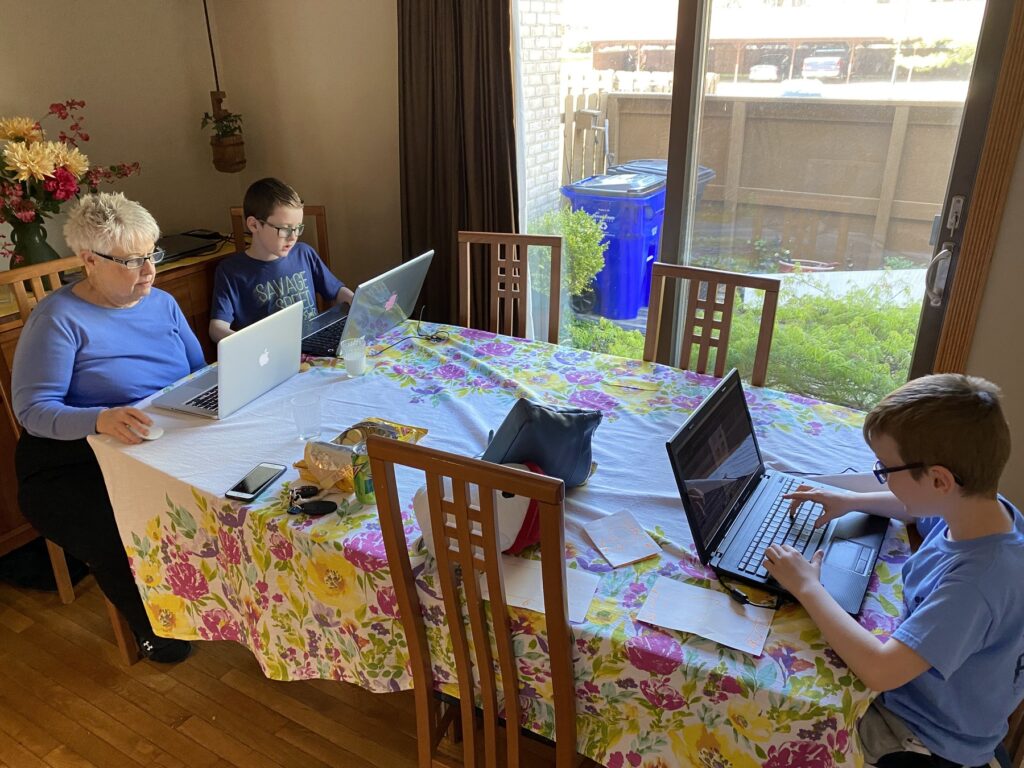
When we arrived back at “Nene’s” house, the boys showed her their latest open source video game obsession: Minetest. We had set up a server for the boys to collaborate on building structures together, and much to their delight, “Nene” fired up her computer and joined them. It was a very sweet cross-generational moment.

LAN party at "Nene's" house! - <i>Photo by the author</i>
LAN party at “Nene’s” house! – Photo by the author

Old State House, Dover, DE

From my travels, September 5, 2021.

Since the boys and I had started hanging around in Delaware more, I thought it might be good to check out some of the local historical sites. Emily had visited the Old State House before, and thought it would be a fun outing, so the next time we visited with “Nene” and “Baba” we took a short drive down to Dover.

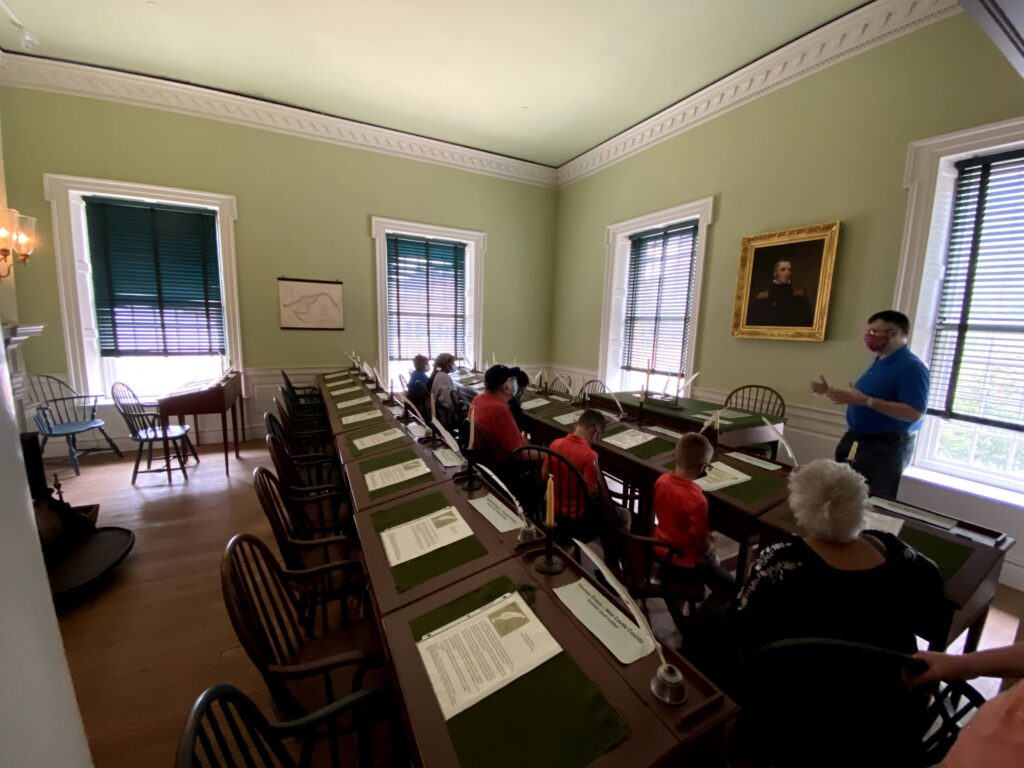
The site was originally a smaller 25′ x 25′ courthouse. That building was where the Declaration of Independence was first read aloud in Delaware – the spot is marked by a monument out front. Downstairs in the “new” building served as a county courthouse originally, and the House and Senate met in chambers upstairs. Both of those meeting rooms were surprisingly small – the Senate only had 9 members back in those days, while the House had 21.

Our group listens to the guide's presentation in the House chamber. - <i>Photo by the author</i>
Our group listens to the guide’s presentation in the House chamber. – Photo by the author

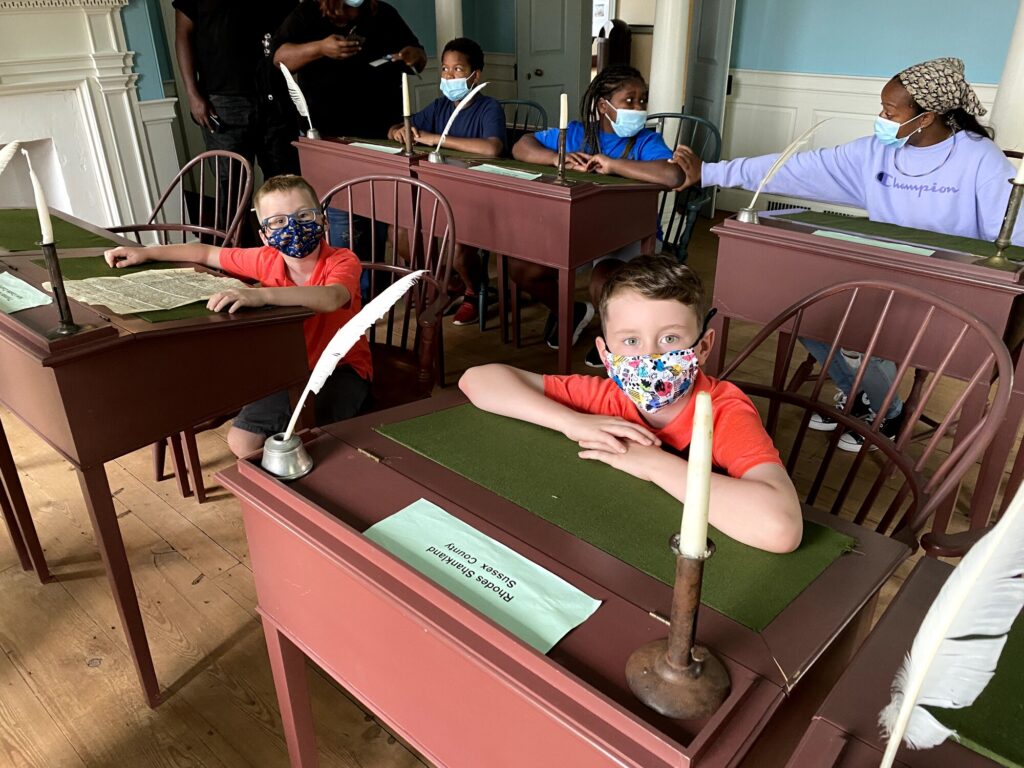
The building has been beautifully restored. They even let us sit at the legislative desks – super cool for the boys. Each desk had the name of a member of the legislature from the 18th century, with a short biographical sketch.

The boys sit in the Senate chamber. - <i>Photo by the author</i>
The boys sit in the Senate chamber. – Photo by the author

Our tour concluded in a room upstairs where some Underground Railroad and abolitionist history was shared.

It was a very nice presentation and tour – especially considering that it was free.

New England Road Trip, Part 3: Minute Man National Historical Park

From my travels, August 6, 2021.

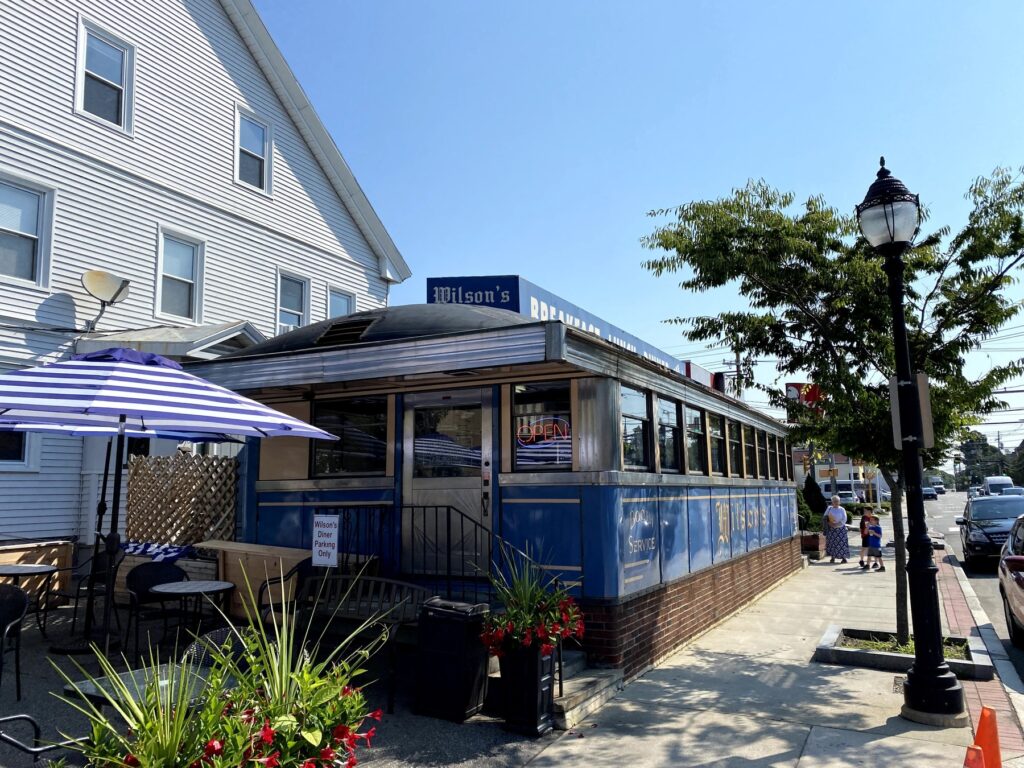
For our last full day in the Boston area, we decided to have a special breakfast in a town that has some special significance for the boys’ family. We drove into Waltham, and had a lovely breakfast at Wilson’s Diner.

It was a real treat to eat at the wonderfully old-fashioned Wilson's Diner. - <i>Photo by the author</i>
It was a real treat to eat at the wonderfully old-fashioned Wilson’s Diner. – Photo by the author

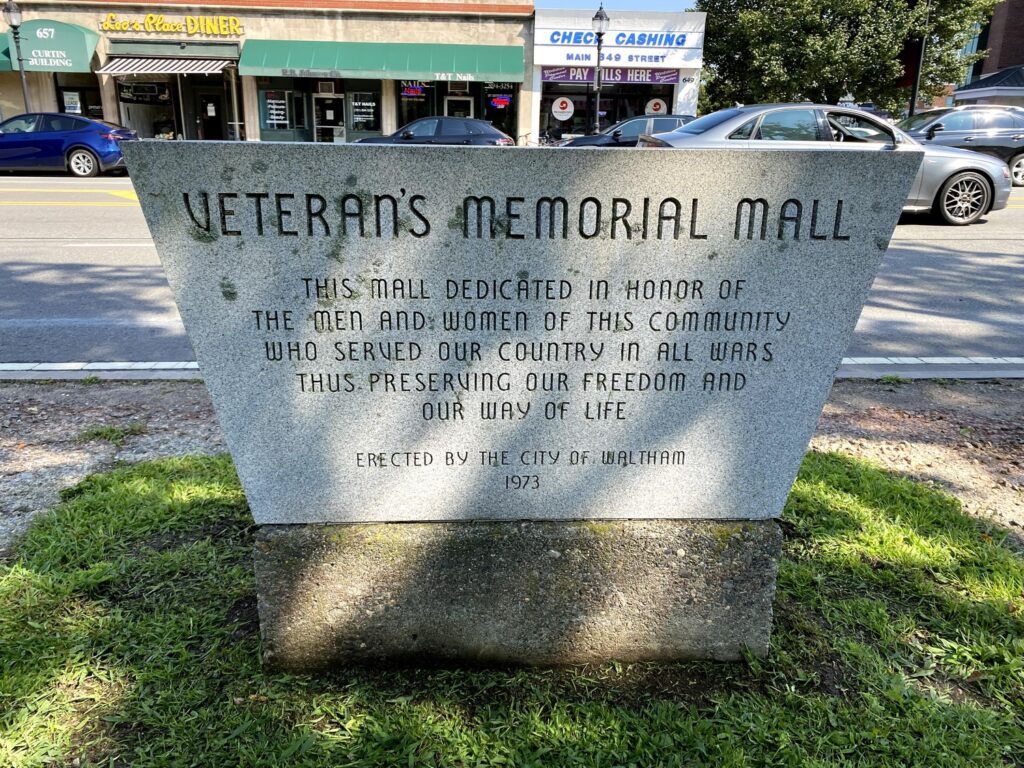
As we walked back to the car, we passed by several historical markers in the town square – none of which had yet been added to the HMDB. I took a ton of photos so that I could add them later. It’s always a nice feeling to be able to contribute in that way unexpectedly.

One of the monuments that I was able to add to the HMDB in Waltham. - <i>Photo by the author</i>
One of the monuments that I was able to add to the HMDB in Waltham. – Photo by the author

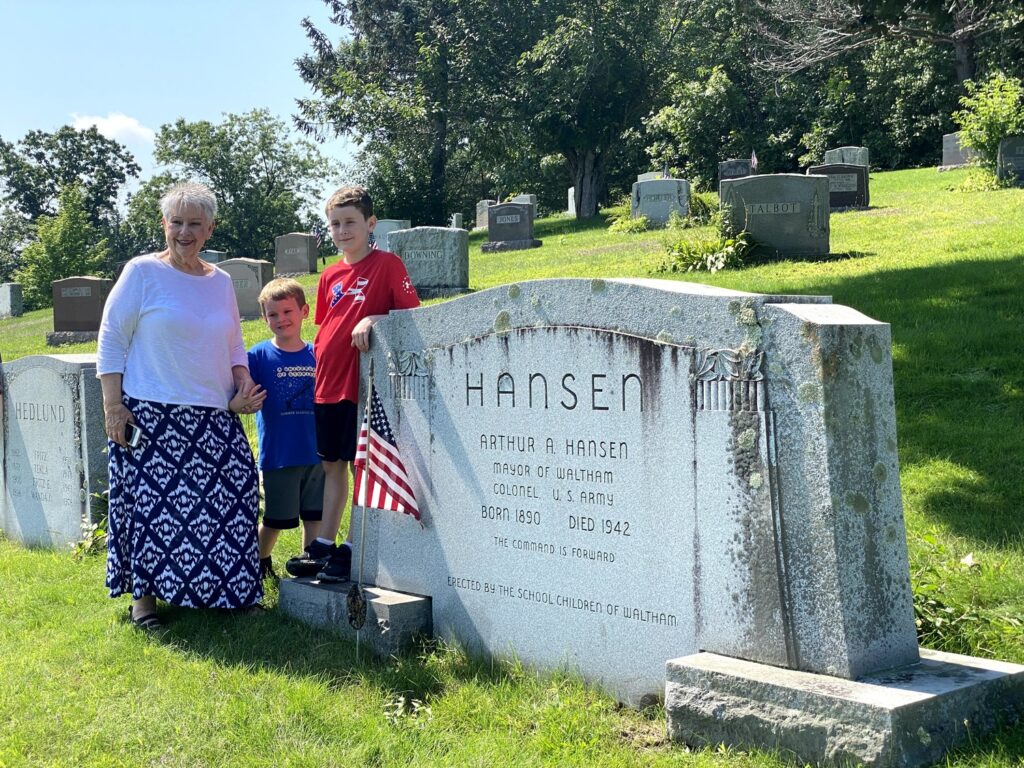
Waltham is where “Nene’s” father grew up. Her grandfather, Arthur A. Hansen, was a decorated WWI hero, and later Mayor of Waltham. “Nene” took us around town to the site of various houses that she knew had been in the family at one point or another. Eventually, we made our way to Mount Feake Cemetery where Mayor Hansen is buried. We visited his gravesite and enjoyed the view of the Charles River and the old watch factory on the far side.

The boys pose with their "Nene" by the grave of their 2x Great Grandfather. - <i>Photo by the author</i>
The boys pose with their “Nene” by the grave of their 2x Great Grandfather. – Photo by the author

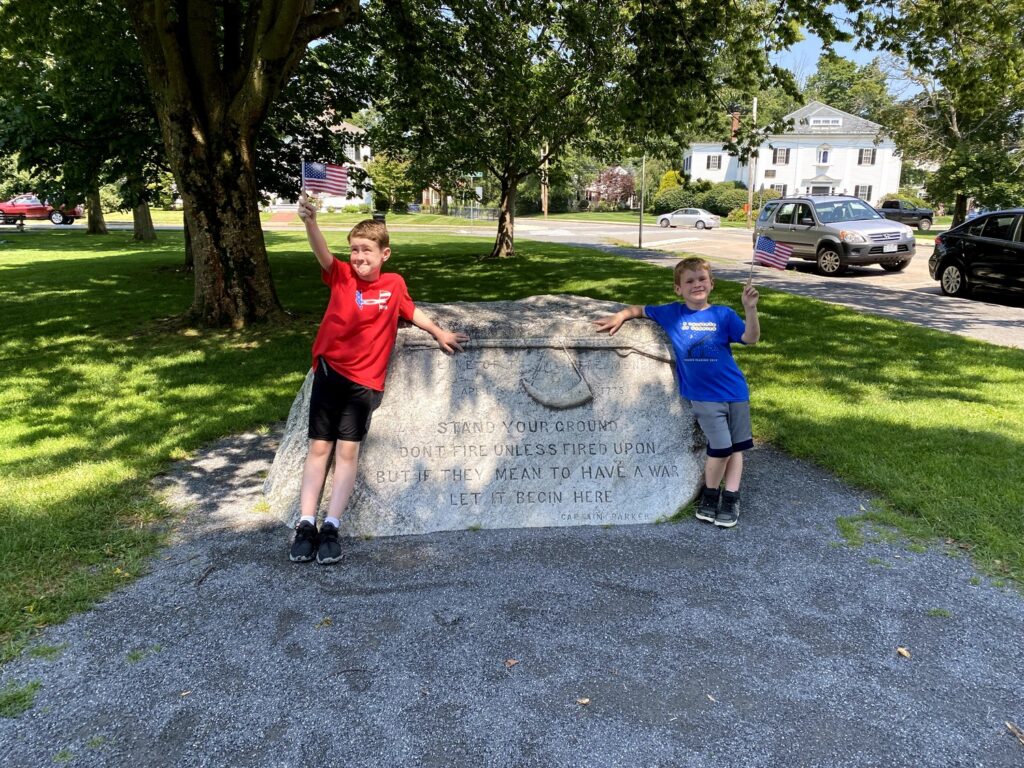
It was soon time for more Revolutionary War history, and we drove over to Lexington where we visited the small museum and the famous green itself where the Battles of Lexington and Concord began. This was another event that the boys had learned about in school, so it was nice to make it more “real” for them.

Posing with their flags at one of the monuments on Lexington Green. - <i>Photo by the author</i>
Posing with their flags at one of the monuments on Lexington Green. – Photo by the author

For the Concord portion of the fighting, we made our way over to Minute Man National Historical Park. We were able to see their museum, and pick up Junior Ranger books at a table out front. One of the volunteers there was nice enough to give me the badges and “deputize” me to award them once the books were complete so we wouldn’t have to double-back. That was a very nice thing.

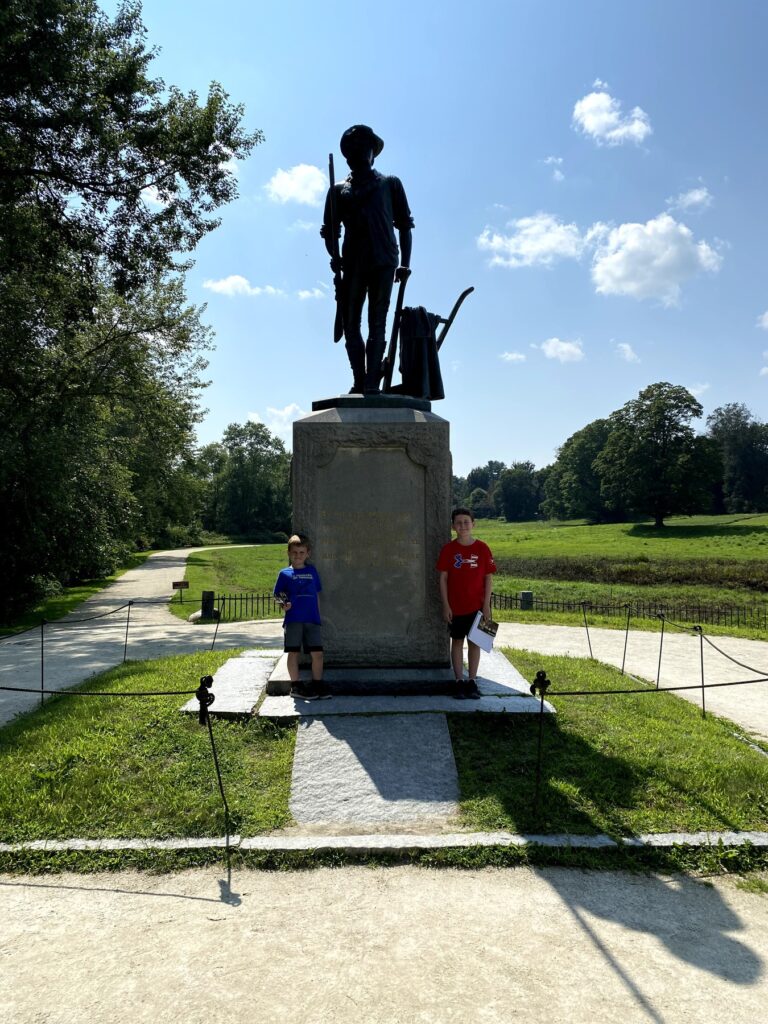
We drove the tour route, stopping at the Hartwell Tavern so the boys could do the activites there and see some of what the Battle Road was like. Two of the rangers there were very nice and engaged with the boys. Eventually, we made it all the way to Concord, and the boys and I strolled down the trail to the Old North Bridge, admiring the monuments and hearing stories from one of the volunteers who was stationed there.

The boys with the Minute Man monument at the Old North Bridge in Concord. - <i>Photo by the author</i>
The boys with the Minute Man monument at the Old North Bridge in Concord. – Photo by the author

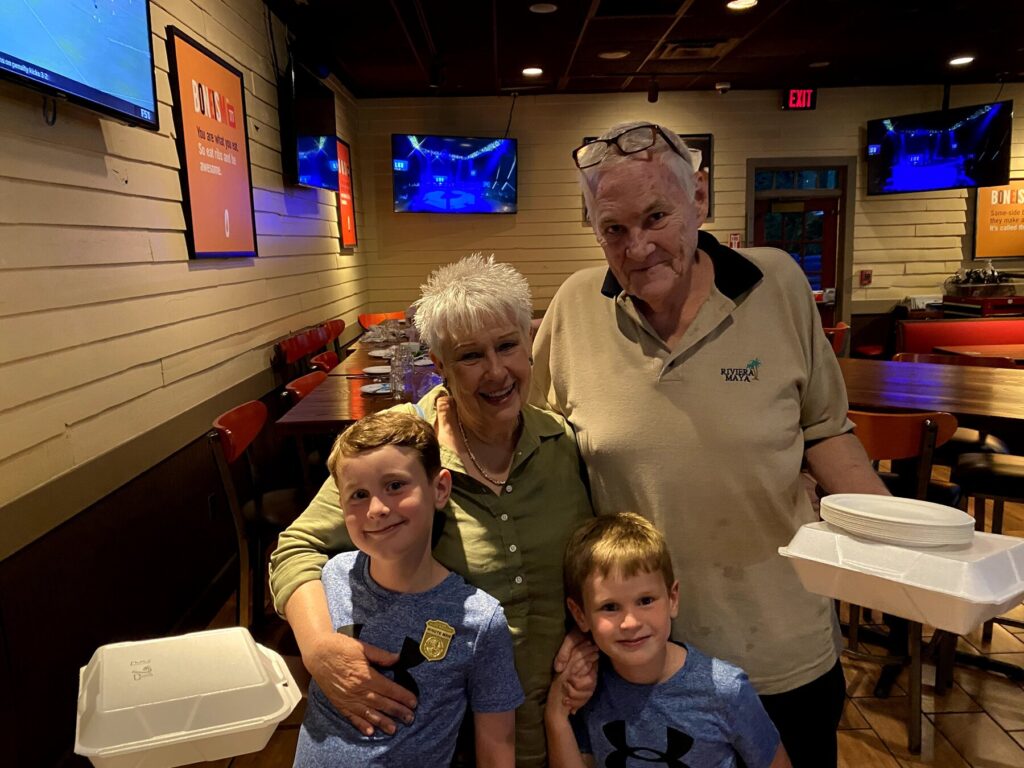
That evening, the boys finished their Junior Ranger activities back at the hotel before we drove a short distance to New Hampshire – passing through the town of Chelmsford where “Nene” had grown up – to have dinner with her brother Artie and several other family members. It was a sweet reunion for them, and a nice introduction for my boys.

"Nene" and her brother pose with my boys after dinner. - <i>Photo by the author</i>
“Nene” and her brother pose with my boys after dinner. – Photo by the author

New England Road Trip, Part 2: Boston

From my travels, August 5, 2021.

We got up and had a nice breakfast at the hotel. It was raining, but we decided to take our chances and roll downtown.

The first stop I wanted to take the boys to was the old Out of Town News near Harvard. Of course, this meant that I had to explain the concept of a newsstand to them, but I also got to share the story of how Microsoft had been started there. It wasn’t the best experience since it was still raining, and there wasn’t anywhere great to park, but it was some history that is more on the nerdy side.

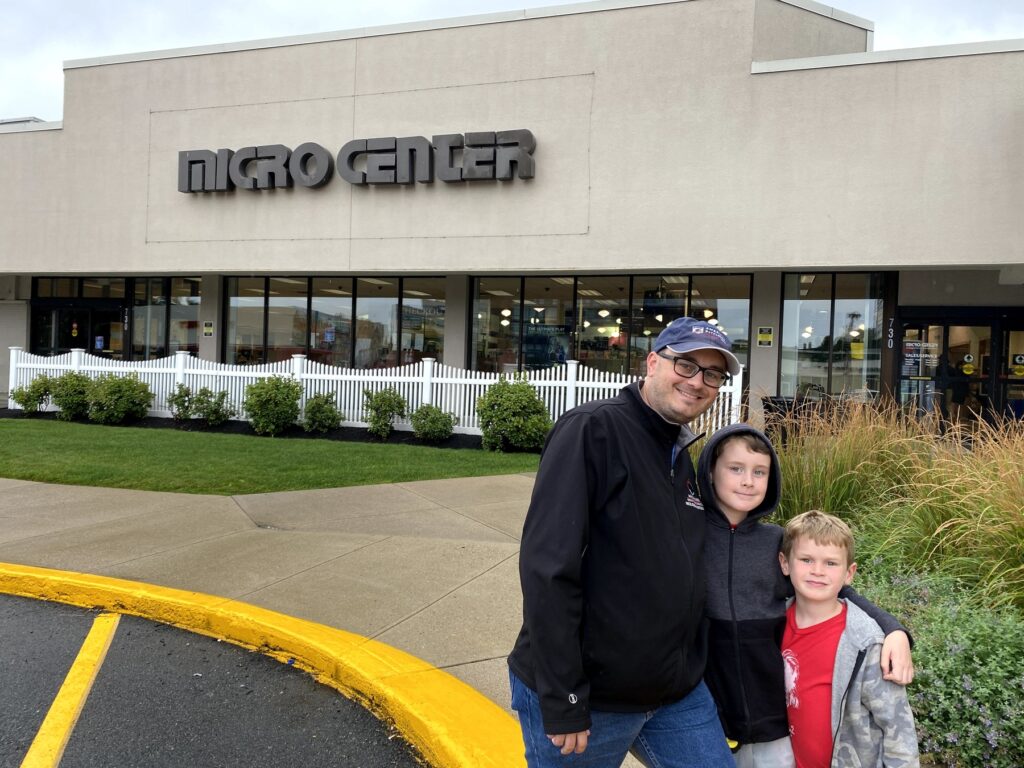
Microcenter is always a hit with my crew. - <i>Photo by Karen Michener</i>
Microcenter is always a hit with my crew. – Photo by Karen Michener

From there, we stopped over at the Cambridge Microcenter – always a favorite store for us. And to be at the one where the MIT folks shop was a treat. It was fun to browse around there, and we were even able to pick up some inexpensive oversized golf umbrellas while we were there. Who would have guessed?

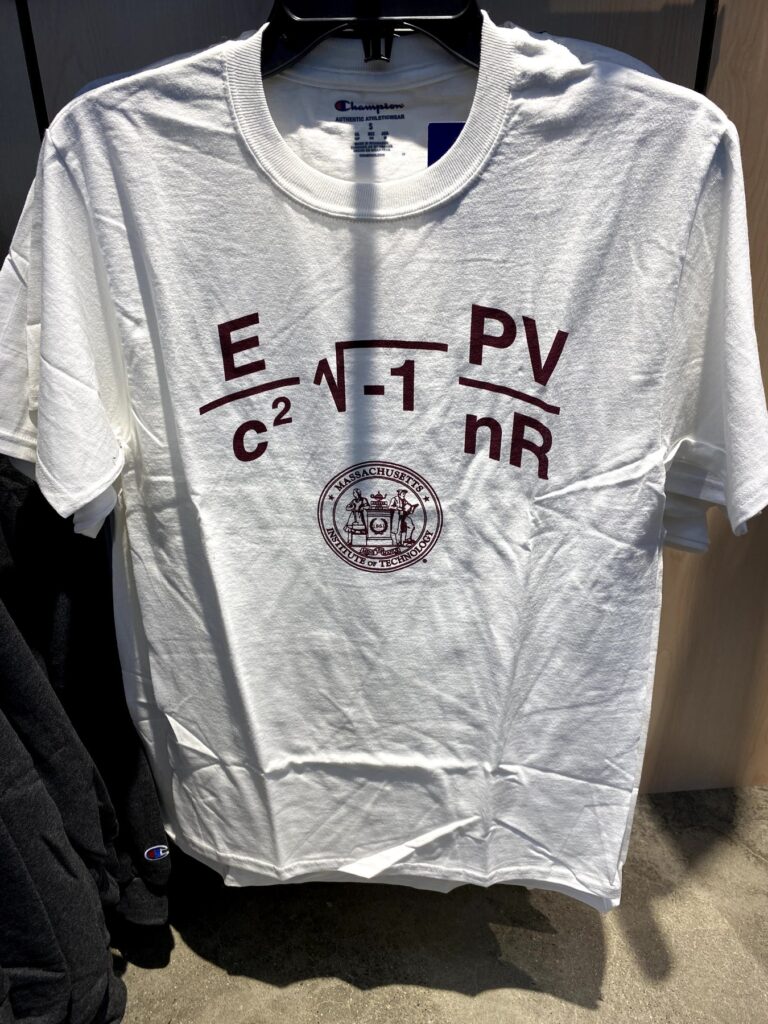
I then took the boys by MIT. Due to COVID-19, we couldn’t really go in any of the buildings, but we were allowed to check out their extremely nerdy bookstore. I especially liked their rather creative “MIT” t-shirts, but they didn’t carry them in the boys’ sizes. Bummer. Both boys were able to pick out postcards that they sent back to their mom – something of a tradition for us now.

One of the nerdiest t-shirts imaginable at the MIT bookstore. - <i>Photo by the author</i>
One of the nerdiest t-shirts imaginable at the MIT bookstore. – Photo by the author

Moving back into history nerd mode, we drove over to the Charlestown Navy Yard to see the NPS Visitors Center there and pick up Junior Ranger books for Boston National Historical Park. There we were able to see and learn a little about the Battle of Bunker Hill. Sadly, the WWII-era Fletcher-class Destroyer USS Cassin Young (DD-793) was closed due to the rain (maybe there is concern about the decks being too slippery?)

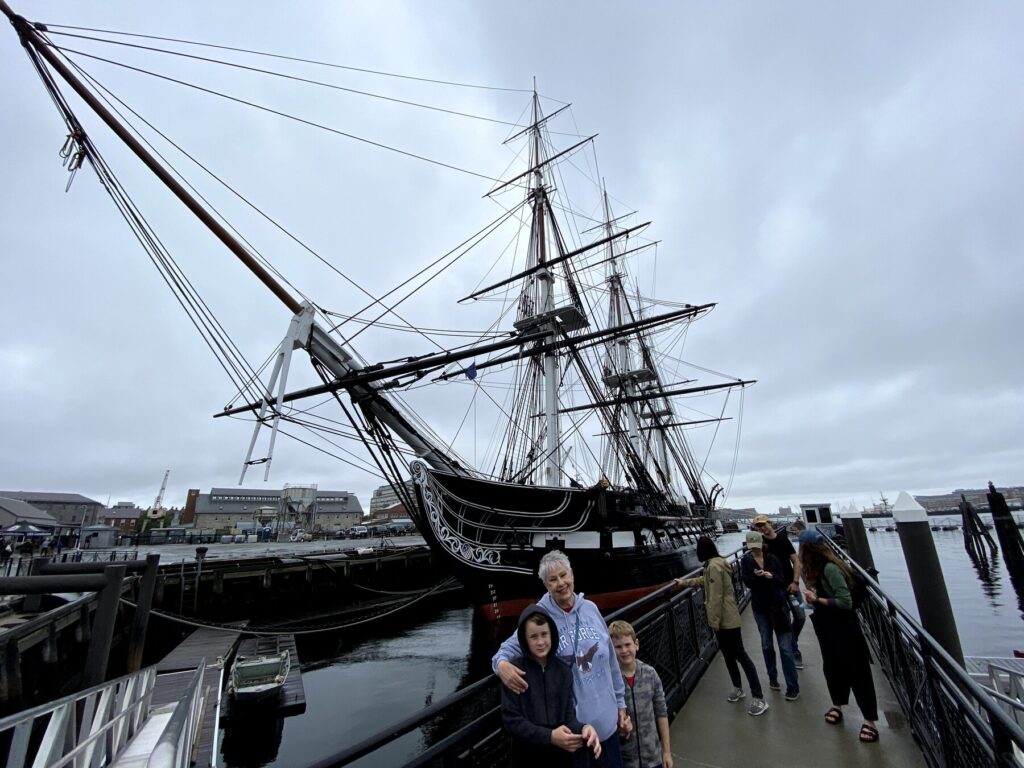
But it wasn’t a complete waste. After passing through security, we were able to go aboard the USS Constitution – the oldest commissioned warship still afloat in the world. It was very cool to be able to explore her and speak with the sailors who keep her in such good shape while sharing her history with the public.

The boys pose with "Nene" in front of the USS <i>Constitution</i>. - <i>Photo by the author</i>
The boys pose with “Nene” in front of the USS Constitution. – Photo by the author

We crossed over into Boston and drove by the Old North Church, and made our way to Faneuil Hall for a late lunch. “Nene” was able to find “fried clams with bellies” that she was very excited about – it was a taste of home for her.

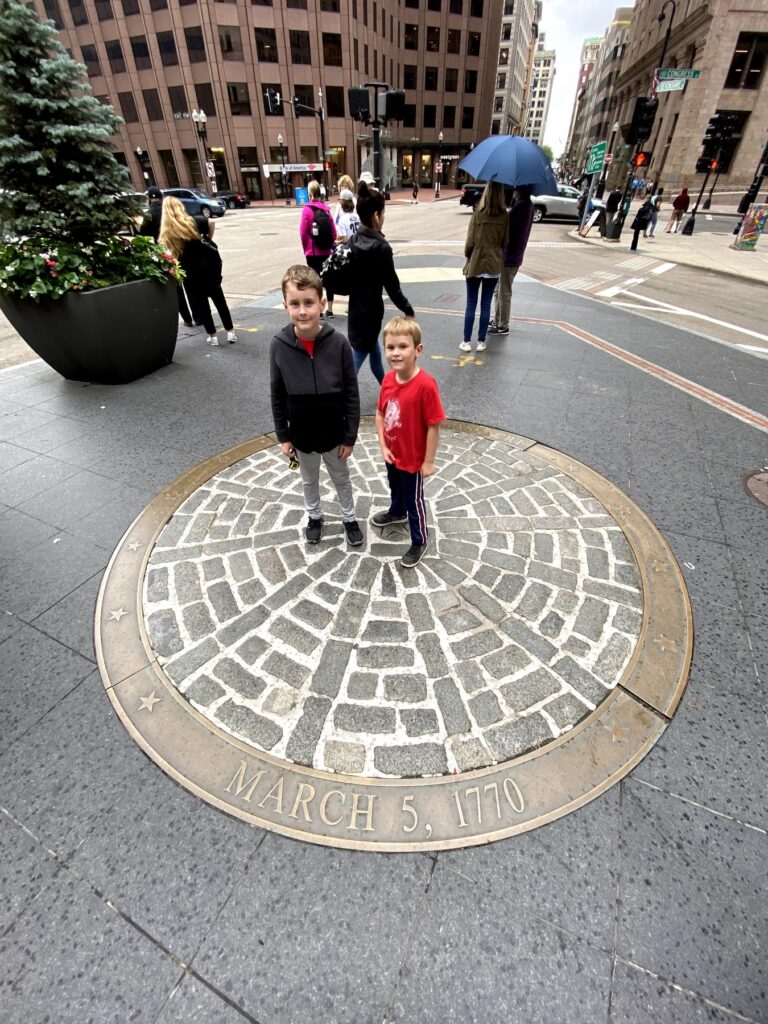
Around the corner, we were able to visit the Old State House, and the site of the Boston Massacre in front of it, which the boys had been reading about in school. It isn’t quite how you picture it since modern-day Boston is certainly more built-up than it was during 1770.

The boys at the site of the Boston Massacre. - <i>Photo by the author</i>
The boys at the site of the Boston Massacre. – Photo by the author

On our way out of town, we drove around Boston Common (and especially to see the monument to the 54th MA) and even got to see Fenway Park. The rest of the evening was spent hanging out at the hotel – including finishing up those Junior Ranger books – and then having dinner at the Burlington Mall food court. There would be more to do in the morning.

New England Road Trip, Part 1: Submarine Force Museum

From my travels, August 4, 2021.

The boys’ grandparents – affectionately known as “Nene” and “Baba” – had wanted to take the boys to Boston to explore some colonial history, as well as some of the history of their family from their mom’s side. Regular readers will know that I’m all for a trip like that!

We loaded up the van and got on the road north. Along the way, I wanted to stop off and show the boys the Submarine Force Museum – which I had visited once with my family as a kid – and was excited to share with my own boys.

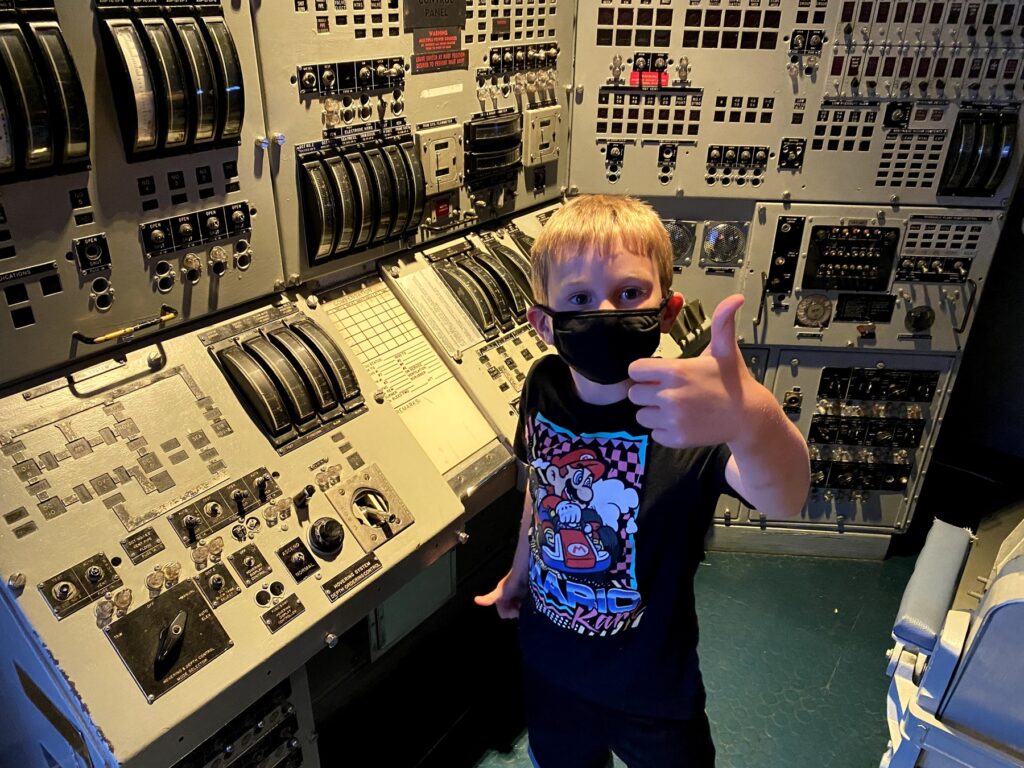
Isaac approves of the dummy control panels in the museum. He loves buttons and switches! - <i>Photo by the author</i>
Isaac approves of the dummy control panels in the museum. He loves buttons and switches! – Photo by the author

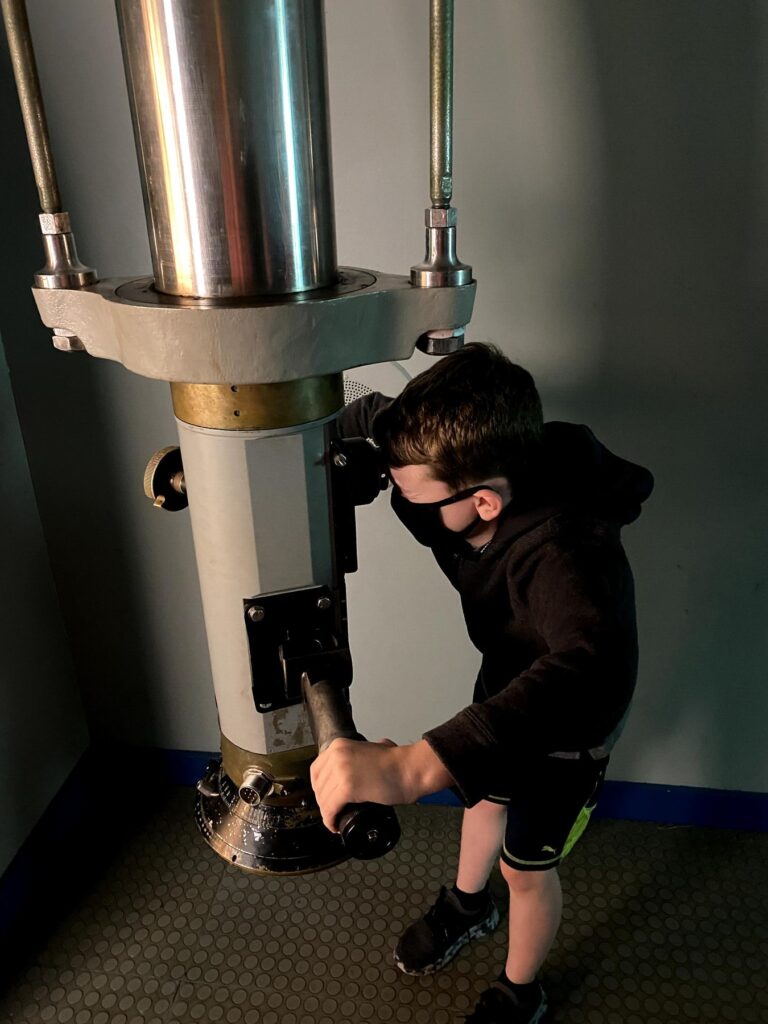
Among the favorite attractions within the museum for my crew were the dummy sub controls and actual working periscopes in a more interactive section. The periscopes stick out through the roof of the building and allow a 360-degree view around the building. The boys had fun looking for our car out in the parking lot – and John said he wanted to install one at home.

John checks out our surroundings through the periscope. - <i>Photo by the author</i>
John checks out our surroundings through the periscope. – Photo by the author

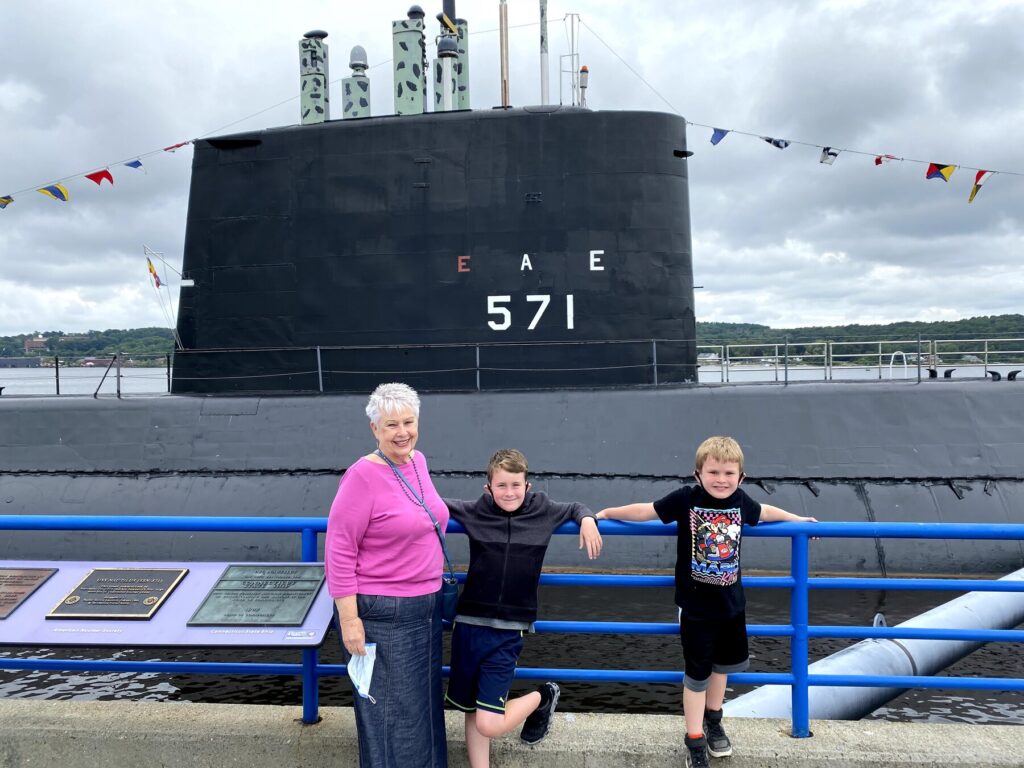
The true highlight of the museum was of course getting to go aboard the world’s first nuclear-powered vessel, the USS Nautilus (SSN-571). The boys and their grandparents had never done anything like that. It’s much roomier than the WWII-era USS Becuna that the boys and I had visited in Philadephia a few years earlier.

The boys with their "Nene" about to go aboard the USS Nautilus. - <i>Photo by the author</i>
The boys with their “Nene” about to go aboard the USS Nautilus. – Photo by the author

I think that everyone had a good time learning and experiencing some new things on our first stop – especially considering that the museum is free. From Groton, CT, we continued north through Rhode Island, and got to our hotel in Lexington, MA that evening. We had a nice dinner out at Red Heat Tavern, and then settled in to rest up for the activities we had planned in Boston the next day.